
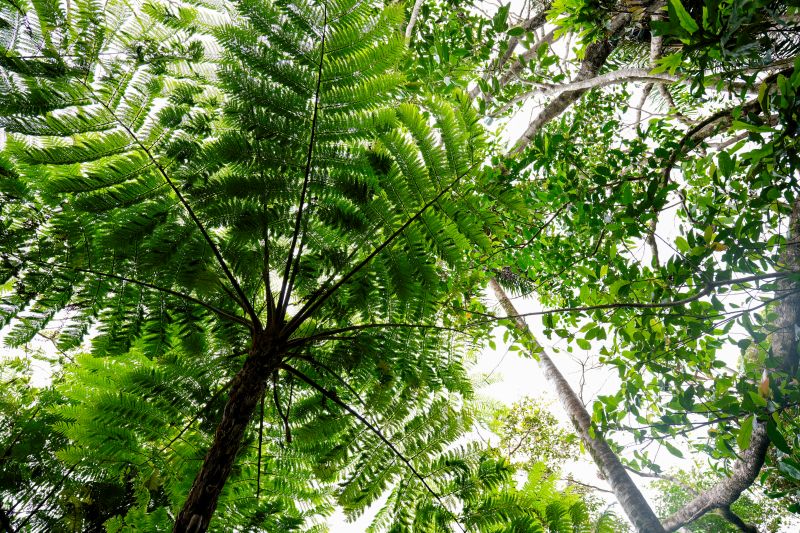
Credits for cassowary habitat, fast-growing 'mini forests' and fire to protect an endangered glider were on show at a Wet Tropics Restoration Alliance's field trip.
Paying landholders to grow cassowary habitat, planting rainforest so densely it forms a canopy within two years and using fire to protect mahogany glider habitat are some ways the forest is being brought back.
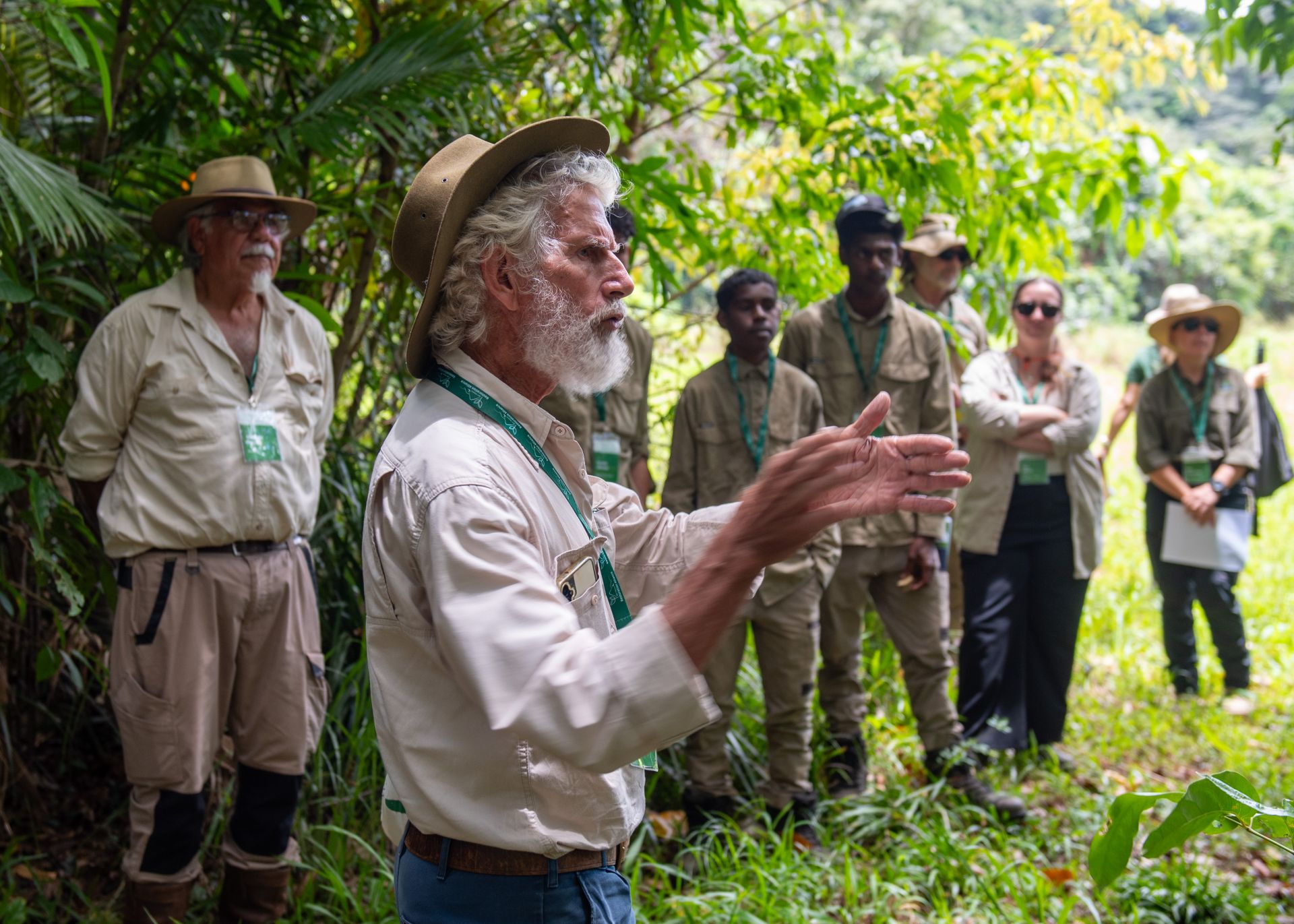
Recently more than 40 members of the Wet Tropics Restoration Alliance, including Traditional Owners, scientists, restoration practitioners, council representatives and community groups toured four restoration sites on the Cassowary Coast on the traditional lands of the Mamu, Djiru, Gulngay and Girramay Peoples.
WTMA Executive Director Scott Buchanan said the Alliance was launched in September 2022 with WTMA, Terrain NRM and James Cook University as founding members.
“The Alliance's work is part of Generation Restoration, the global movement of the UN Decade on Ecosystem Restoration (2021–2030), it unites key stakeholders who restore and protect Wet Tropics landscapes and the natural and cultural values they hold,” he said.
At Ninds Creek near East Innisfail, participants visited Australia's first registered project to generate both Cassowary Credits and Australian Carbon Credit Units (ACCUs) from one site. Delivered by Cassowary Coast Regional Council, Terrain NRM and Mamu Aboriginal Corporation, it "stacks biodiversity and carbon outcomes, which recognises and values the multiple benefits that are delivered when a landholder restores habitat in the Wet Tropics,” Bronwyn Robertson from Terrain NRM said.
“It was a tough site with poorly drained alluvial soils, but we managed to plant 3,500 trees that included about 50 different species over the hectare site. These are real projects that generate real outcomes,” she said.
At Gurrbum Nature Refuge near Mission Beach, Community for Coastal and Cassowary Conservation (C4) has planted more than 25,000 native trees on a 16-hectare former banana plantation, reconnecting a corridor that extends from the Mission Beach lowlands to Wet Tropics highland rainforests, providing critical wildlife links.
C4 has trialled the Miyawaki method, which uses very dense planting to fast-track forest structure, alongside a modified version suited to local conditions. Using more than 75 rainforest species and very little herbicide, some areas have reached canopy closure within two years.
Peter Rowles, Chair of the Wet Tropics Restoration Alliance Steering Committee said, “The Miyawaki method generates incredible results for rapid site capture. The development of dense canopy slows down weed growth, particularly invasive grass species, reducing the amount of costly maintenance. However, the expense of Miyawaki style planting is prohibitive on a large scale, so we are using it in sections to create high density nodes. For our larger scale planting we have adapted some principles such as better site preparation and higher density planting to get rapid canopy closure and site capture to control weeds in a shorter time.”
At Big Maria Creek, Queensland Rail and local landscape maintenance business Norveg showed how dense lomandra planting around a replaced rail bridge stabilises soils, suppresses weeds and stays low enough to keep the line clear.
At Dallachy Aerodrome, the focus was on planned fire to protect habitat for the endangered mahogany glider. Participants walked through burnt and unburnt broad-leaf tea-tree country, where Girringun Aboriginal Corporation's rangers carry out the burns.
Daryl Dickson from the Mahogany Glider Recovery Team, said, “this is a difficult landscape to manage well. The endangered coastal broad leaf tea tree woodlands have been neglected and lacking in appropriate management in past decades. Today we are seeing management combining Traditional Owner knowledge and science using cool mosaic burning techniques to restore and recover these woodlands. This is essential for the woodlands and for the vital corridors and food resources that these areas provide for the endangered mahogany glider”.
Each project relied on partnerships between councils, Traditional Owner organisations and rangers, NRM bodies, community groups, a recovery team and a rail operator. Bringing those groups together to share what works, and what doesn't, is what the Alliance was set up to do.
Knowledge sharing, collaboration and First Nations knowledge are essential to restoration that suits local conditions. Done well, it strengthens biodiversity, improves water quality, builds climate resilience and opens new economic opportunities, including emerging markets such as carbon and cassowary credits.
Mr Rowles said, “With the Restoration Alliance, we have established a community of restoration practitioners who are able to share resources and ideas. Working as network, we can achieve much more.”
The Alliance hosted the field trip with Cassowary Coast Regional Council, Terrain NRM, Mamu Aboriginal Corporation, C4, the Mahogany Glider Recovery Team, Girringun Aboriginal Corporation, Queensland Rail and NORVEG.
The Wet Tropics Restoration Alliance acknowledges the funding support of the Queensland Government.
Last updated: 19 Nov 2026