
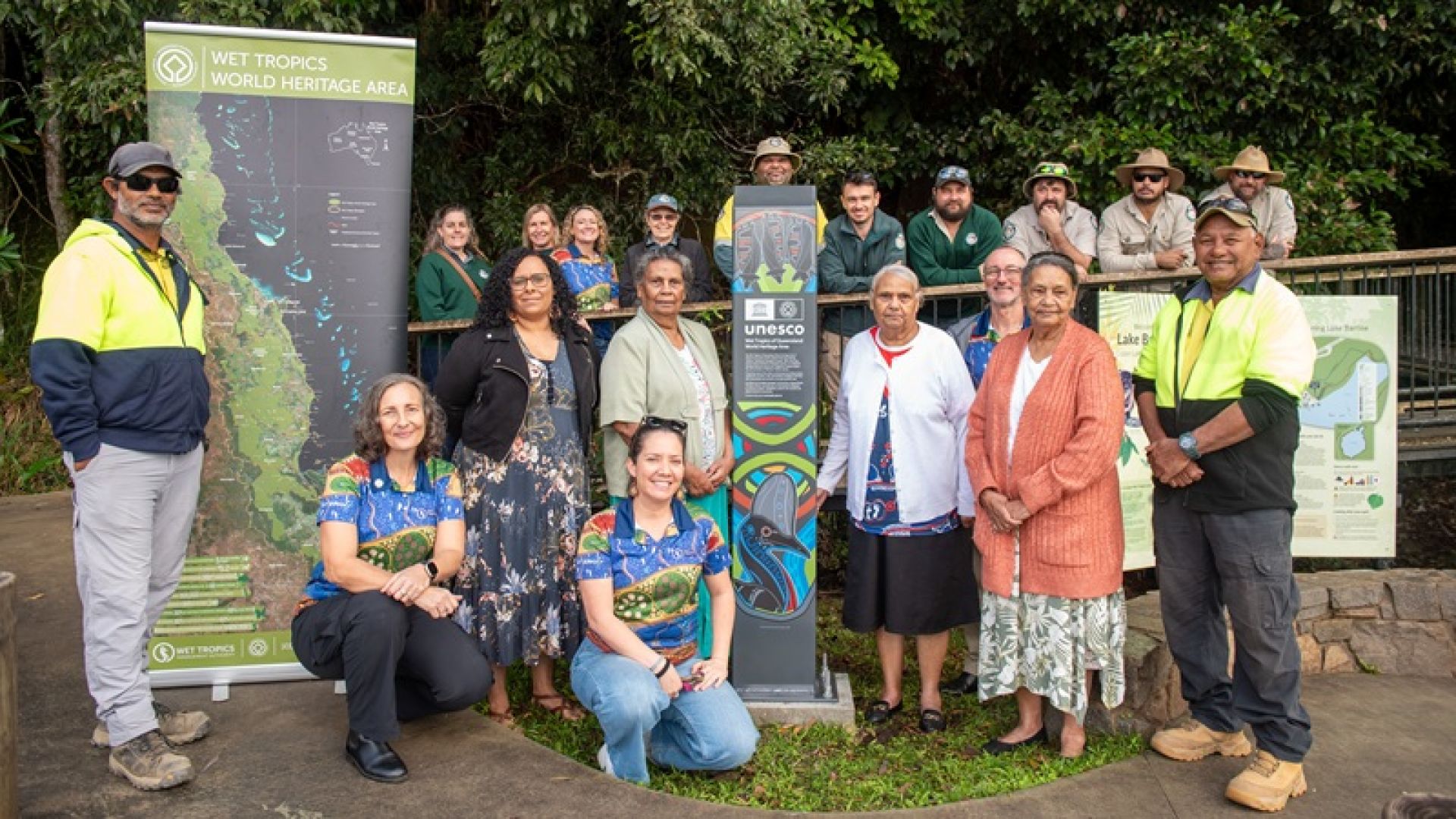
The first two Wet Tropics World Heritage identity columns were unveiled last week at Cathedral Fig Tree and Lake Barrine on Tablelands Yidinji Country, marking the beginning of a project to better connect visitors with the region’s globally significant natural and cultural heritage.
Funded by the Queensland Government and the Wet Tropics Management Authority (WTMA), the identity columns are the first visible expression of a new World Heritage visual identity that will be rolled out at up to 16 popular visitor sites throughout the Wet Tropics World Heritage Area.
WTMA Executive Director Scott Buchanan said the project would help bring the Wet Tropics’ World Heritage story to life for visitors.
“Developed between Queensland Parks and Wildlife Services and Partnerships (QPWS&P) and WTMA, and in partnership with Rainforest Aboriginal Traditional Owner groups, the identity columns celebrate the enduring connection of Rainforest Aboriginal Peoples to Country while ensuring the cultural values of each location are respectfully represented,” Mr Buchanan said.
The unveiling at Lake Barrine included a Welcome to Country by Tablelands Yidinji Traditional Owners and was attended by representatives from QPWS&P and WTMA.
The identity columns are the first stage of the World Heritage Enhanced Interpretation and Signage Project. All the columns will be installed at high-visitation sites selected in consultation with park managers and visitor management staff, enriching the visitor experience and deepening understanding of the region's Outstanding Universal Value.
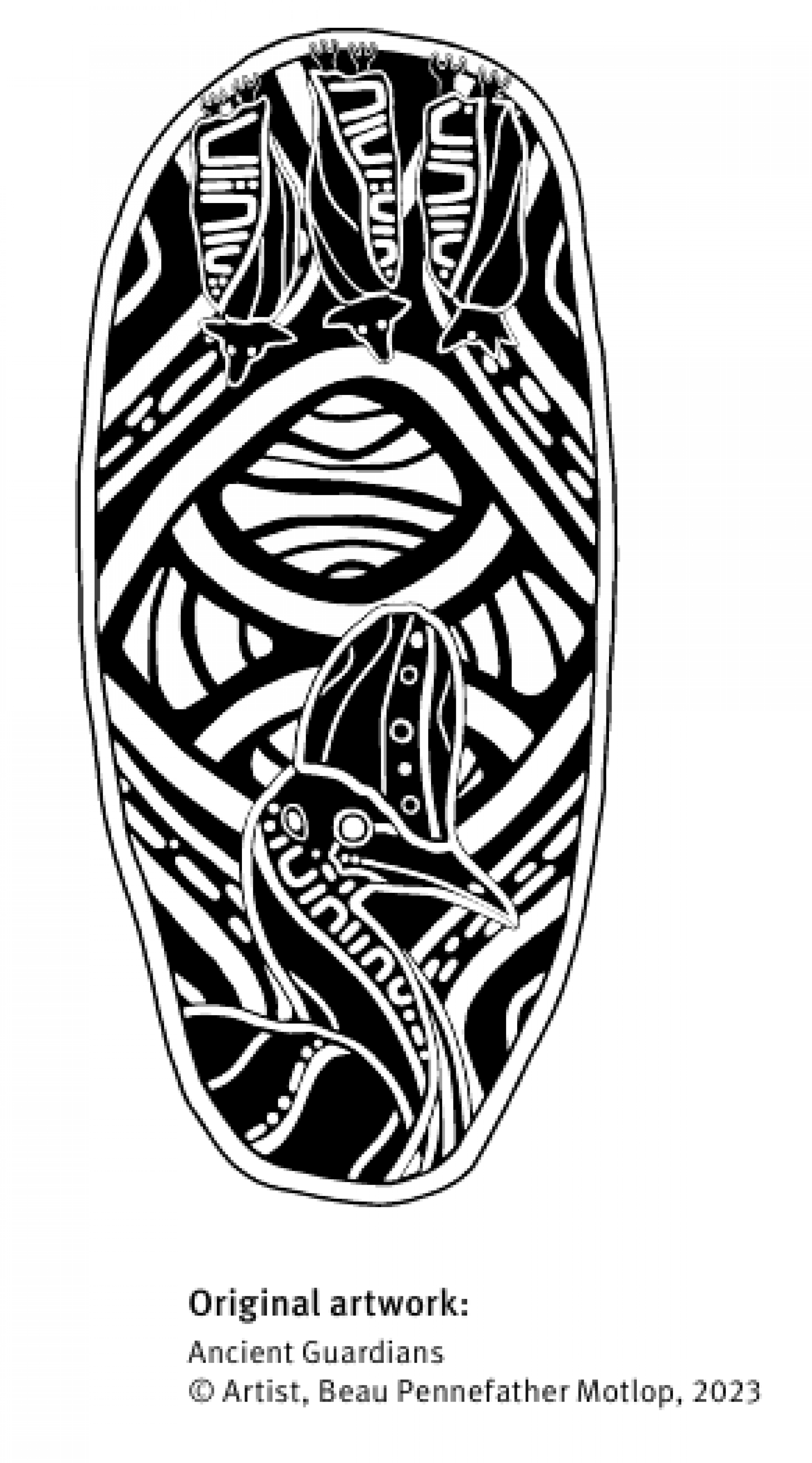
The columns feature Ancient Guardians, an original artwork by First Nations artist Beau Pennefather Motlop, a proud Jirrbal, Wagoedaggum and Ngapuhi man. The design incorporates landscapes, important totems and a distinctive rainforest shield, a cultural symbol unique to Rainforest Aboriginal Peoples of the Wet Tropics.
The project supports the Queensland Government's Destination 2045 vision by showcasing Queensland's unique natural and cultural heritage while strengthening world-class nature-based tourism experiences.
The Wet Tropics World Heritage Area stretches 450km from north of Townsville to south of Cooktown and protects almost 895,000 hectares of mostly tropical rainforest. Home to more than 20 Rainforest Aboriginal groups, the Wet Tropics is recognised globally for its remarkable natural and living cultural heritage.
About the artwork
Ancient Guardians
Rainforest shields are unique to Rainforest Aboriginal Peoples’ culture and are found across the Wet Tropics of Queensland. They display art that represents the cultural identity of Rainforest Aboriginal groups.
This shield symbolises the cultural values of the Wet Tropics World Heritage Area. The designs incorporate mountains and waterways to portray Wet Tropics landscapes. The circular design in the middle illustrates the continuing ecological cycles of animals and plants, which live symbiotically within the region.
Spectacled flying-fox are responsible for seed dispersal and pollination to ensure the health of native forests.
Cassowary help maintain the diversity of rainforest trees by dispersing seeds and are the only animal to carry large fruits long distances.
Both species are vital to the health and continuation of the rainforest through natural regeneration.
The 'U' shapes depicted on the animals symbolise people. This shows the connection between people and nature–emphasising the importance of protecting the region and its wildlife.
Last updated: 20 Jul 2026