
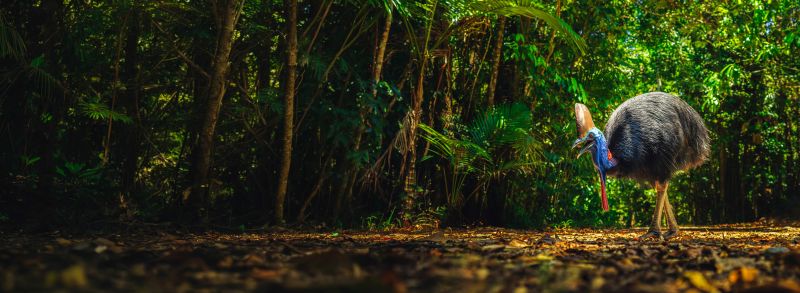
Southern cassowary
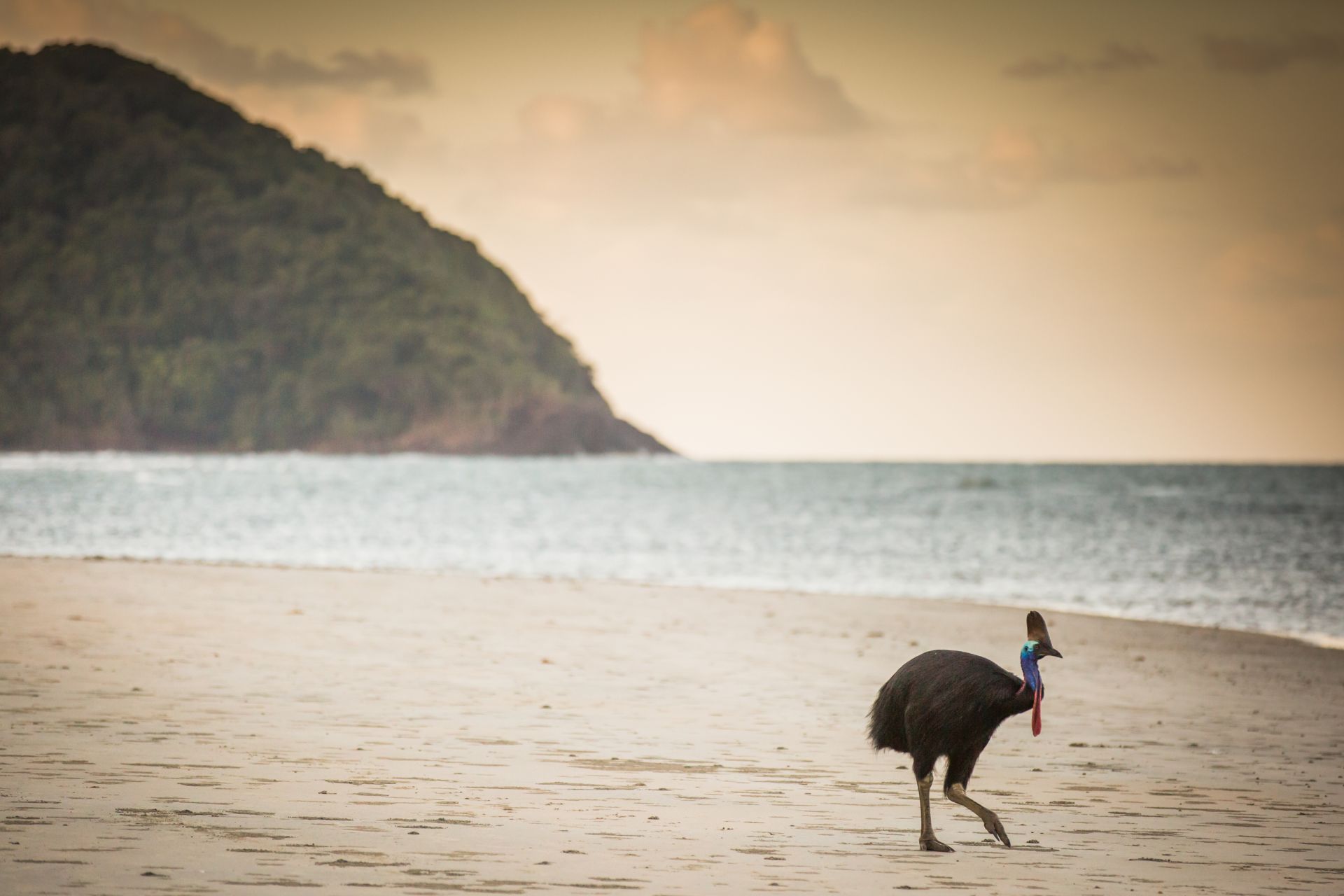
Known as the ‘rainforest gardener’ the southern cassowary (Casuarius casuarius) is considered a keystone species, vital for dispersing seeds through the rainforest. It is also one of the most recognisable animals of the Wet Tropics—glossy black feathers, a blue and red neck, a helmet-like casque. They can grow as tall as 2 metres and weigh up to 76 kilograms.
Cassowaries live in tropical rainforest in North Queensland and Papua New Guinea. Australia has two populations:
- one across the Wet Tropics, between Mount Halifax/Paluma and Cooktown
- a smaller one on eastern Cape York.
Best estimates put the Wet Tropics population at around 4,400 adults, based on comprehensive field and DNA research coordinated by the CSIRO. Cassowaries are solitary, wary, and live in dense, remote terrain.
A dinosaur throwback
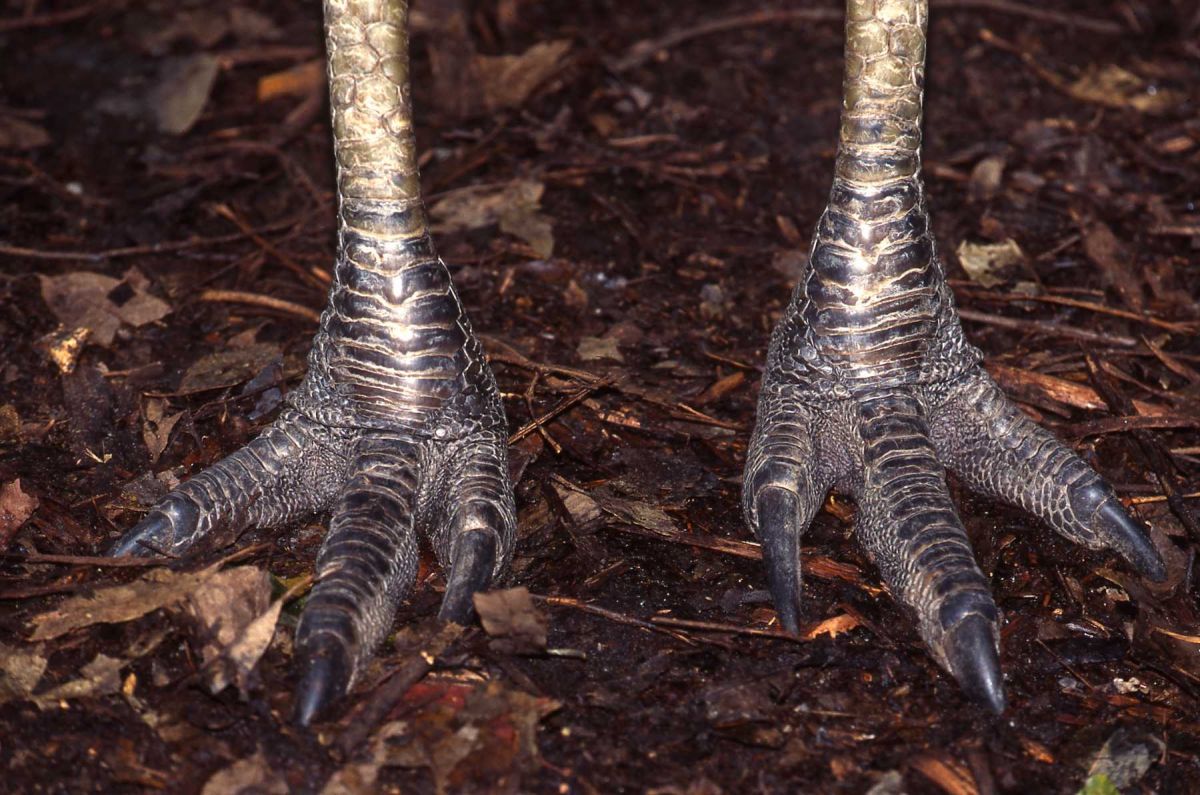
Cassowaries are ratites, an ancient group of flightless birds that also includes the emu, kiwi, rhea and ostrich, dating back around 70 million years. They share some features with some dinosaurs, including three-taloned feet.
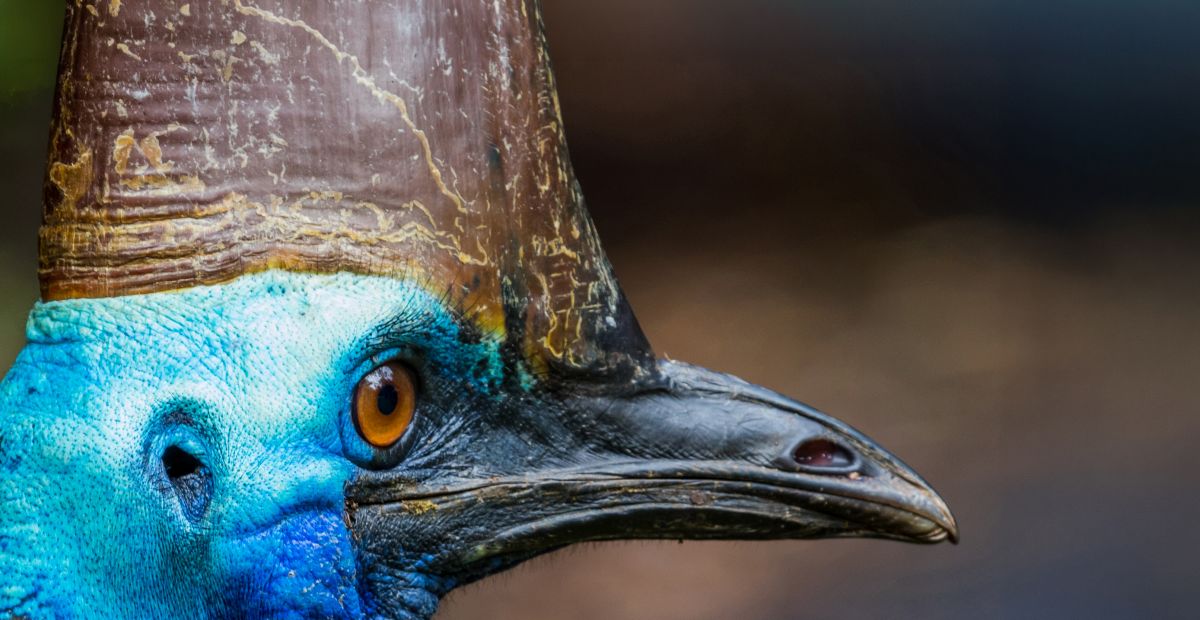
Each bird's casque is unique, and its purpose is debated—it may help detect low-frequency sound over long distances or regulate temperature. Feathers are coarse and hair-like, with a split quill rather than interlocking barbules. Small wing bones mean cassowaries can't fly; instead, they're built for pushing through dense vegetation and running fast. Females are larger than males, reaching up to two metres and 76kg—among the heaviest birds in the world.
Solitary lives, unconventional parenting
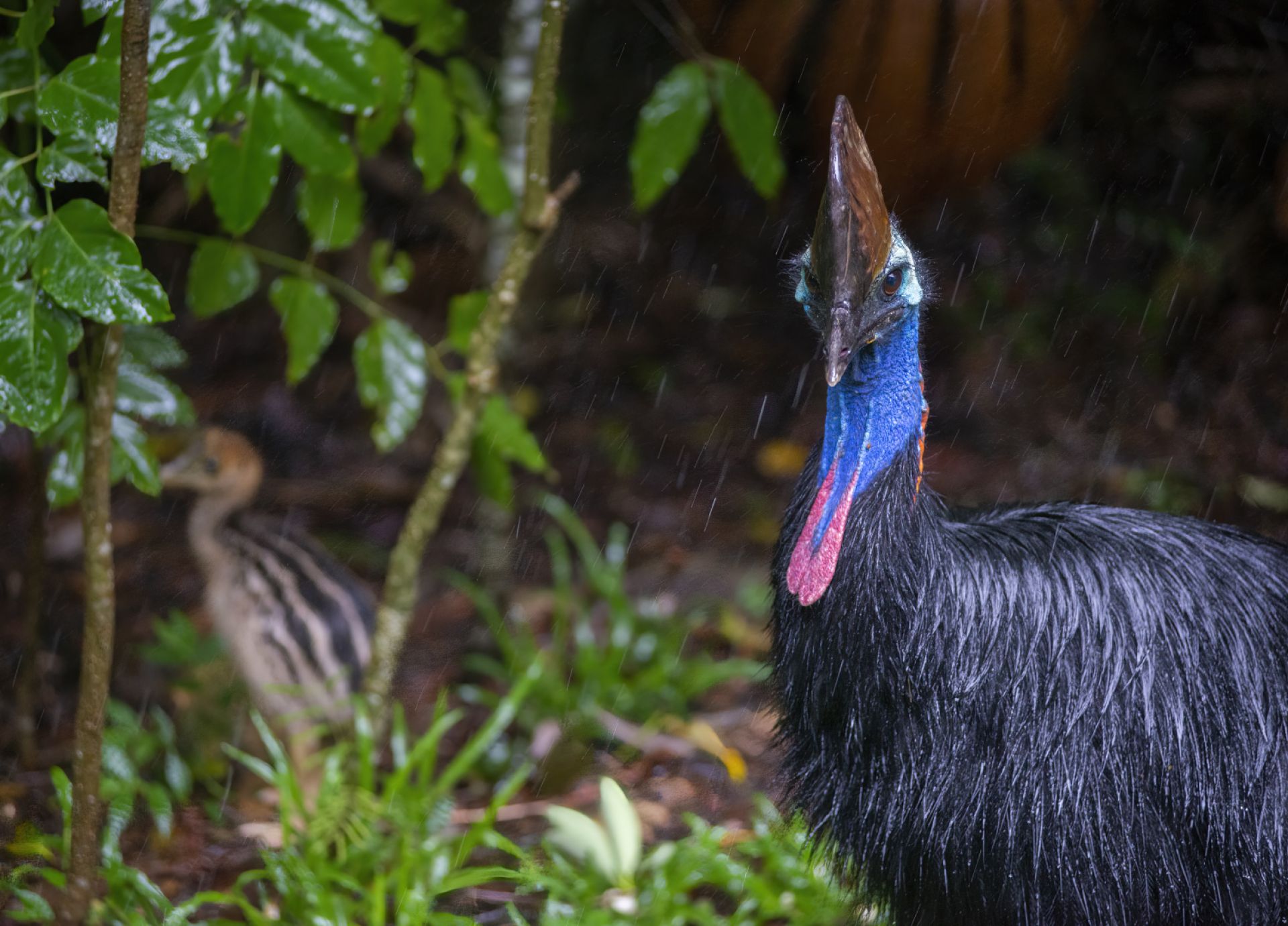
Cassowaries hold a home range they move through regularly—50 to 240 hectares, up to around 700 on the Atherton Tableland or in the Daintree. Mission Beach has the highest density of cassowaries in the country, with 40 percent of its habitat occurring on private land. Ranges overlap rather than being strictly defended, particularly between a female and the several males she shares territory with.
Parenting flips the usual pattern. A female lays three to five eggs for a male, then moves on to lay further clutches for other males. Each male incubates alone for about 50 days and raises the chicks by himself. Between 8 and 18 months, fathers banish sub-adults from the home range.
Rainforest gardeners
-
 © Steven Nowakowski
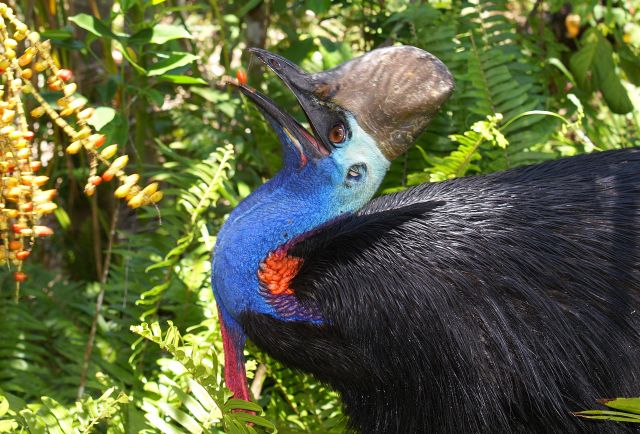
Cassowary eating palm seeds -
 © Maxime Coquard
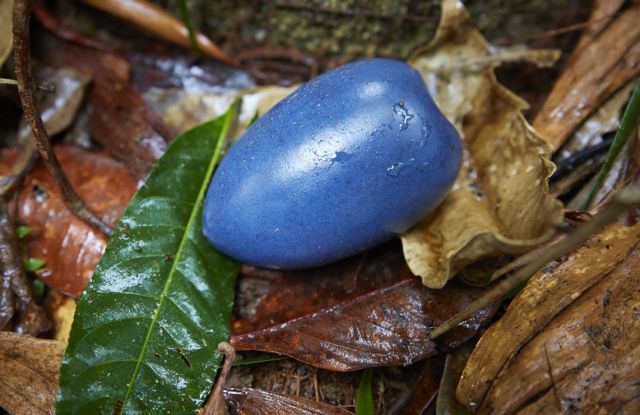
Cassowary plum (Cerbera floribunda)
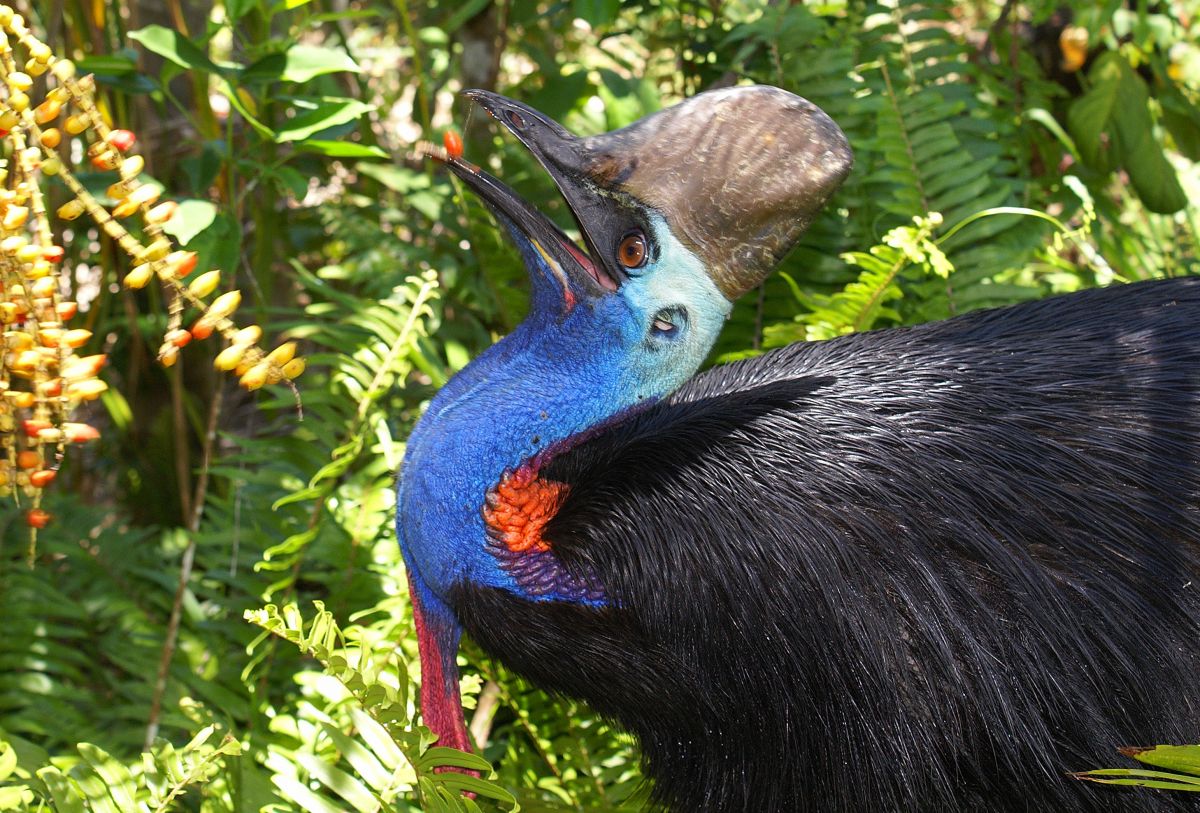
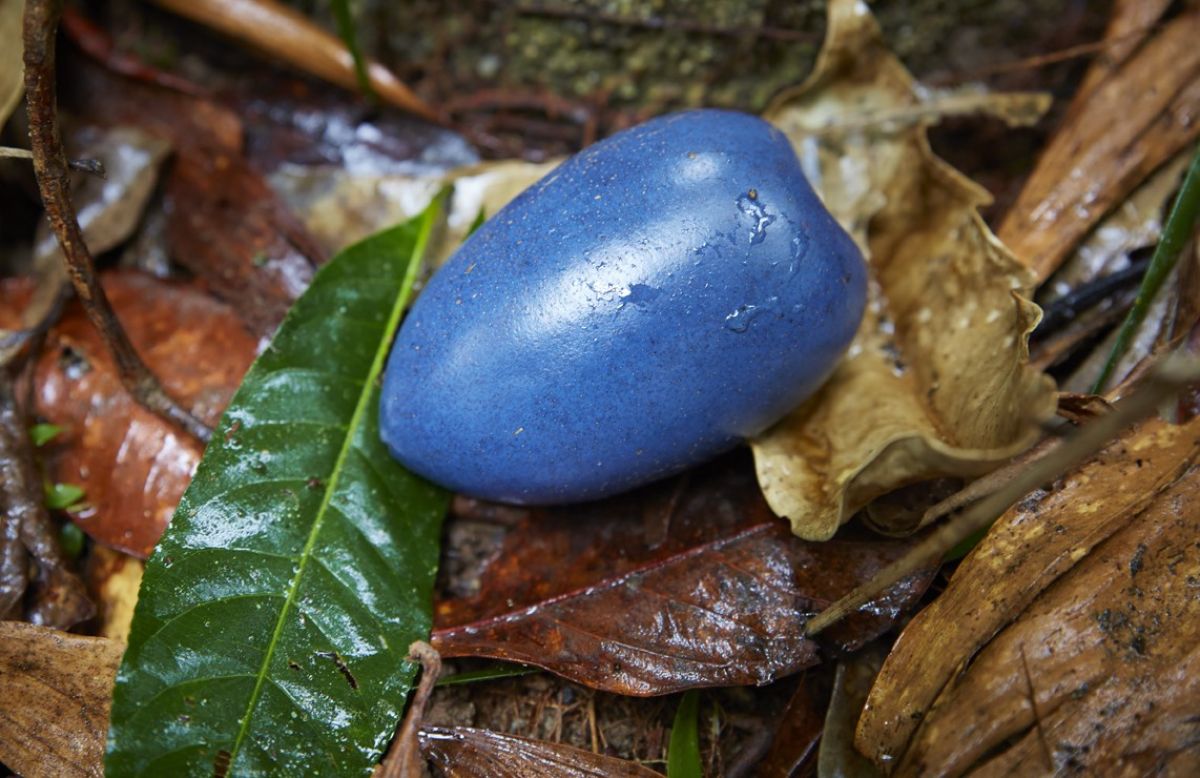
Cassowaries eat fruit from more than 238 plant species, plus fungi, snails, insects, small vertebrates and carrion. They're the only animal able to disperse the seeds of over 70 rainforest trees whose fruit is too large for anything else to carry. An unusual digestive system — a mix of stomach enzymes, short intestines and an active liver—lets them safely process fruit toxic to most other animals, and seeds pass through intact, deposited in dung piles that double as fertiliser.
This makes the cassowary a keystone species: without it, the plants that depend on it for dispersal would decline, becoming restricted to certain locations, and the rainforest would grow less diverse. Cassowaries also carry deep cultural significance for Rainforest Aboriginal Peoples, known by different names across different Country—including goondoi (Djiru), gumbugan (Mamu)—and featured in traditional story, ceremony and dance.
Threats
The Wet Tropics cassowary population is stable and listed as endangered by both Queensland and Australian governments.
- Land clearing, especially in the coastal lowlands and Atherton Tableland, has significantly reduced habitat; broad-scale clearing has slowed, but fragmentation remains a serious problem.
- Vehicle strikes are the leading cause of adult deaths.
- Dogs are especially dangerous to chicks and juveniles.
- Feral pigs damage habitat, and cyclones can compound these pressures further.
Feeding cassowaries—however well-meaning—is one of the most preventable threats, it's also illegal and fines apply. A fed bird loses its natural wariness, starts approaching roads and houses, and becomes far more likely to be hit by a car or attacked by a dog; adults, especially males with chicks, can also grow more aggressive around people.
Conservation
More than 89% of critical cassowary habitat in the Wet Tropics is protected. The Wet Tropics Management Authority chairs the Cassowary Recovery Team (CRT)—a collaborative group focused on the conservation of the southern cassowary in Australia. Established to implement the draft Recovery Plan for the southern cassowary, the CRT aims to protect cassowaries, their habitats, and corridors from threats through better planning, monitoring, and community involvement.
Staying safe around cassowaries, be ‘Cass-o-wary’
Being Cass-o-wary means knowing how to keep yourself safe around cassowaries as well as helping to protect these endangered animals.
Drive carefully and slowdown in cassowary territory and keep dogs leashed or fenced.
For more information
Last updated: 13 Oct 2026