
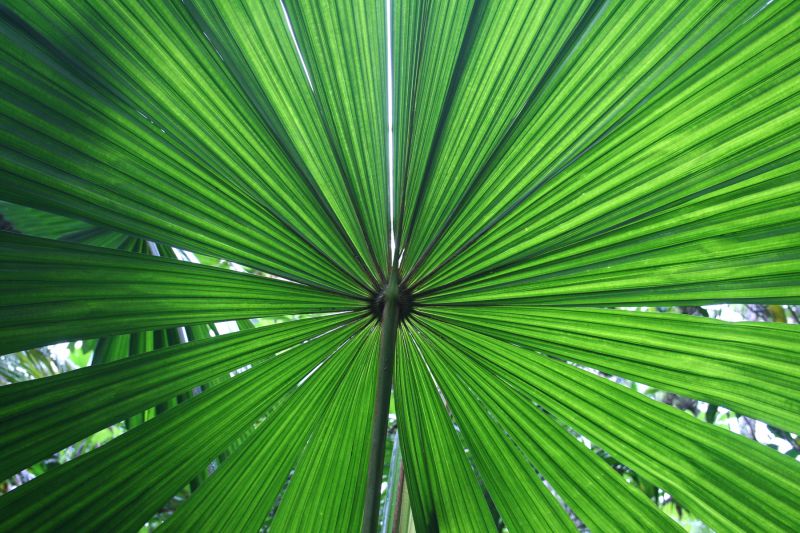
-
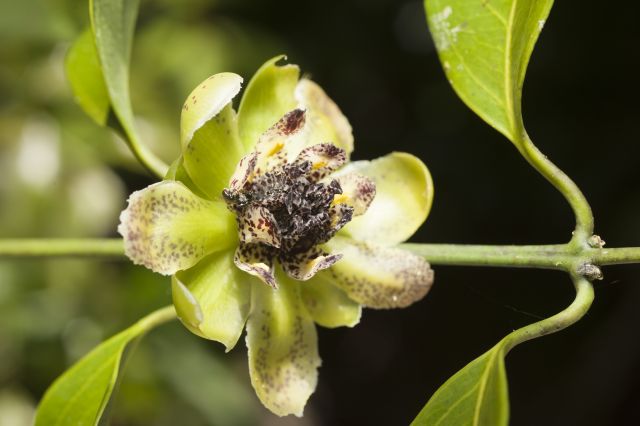 © WTMA/Gary Wilson
Representing the most ancient group of flowering plants, rare Wet Tropics endemic Austrobaileya scandens is the only species of its kind (monotypic) -
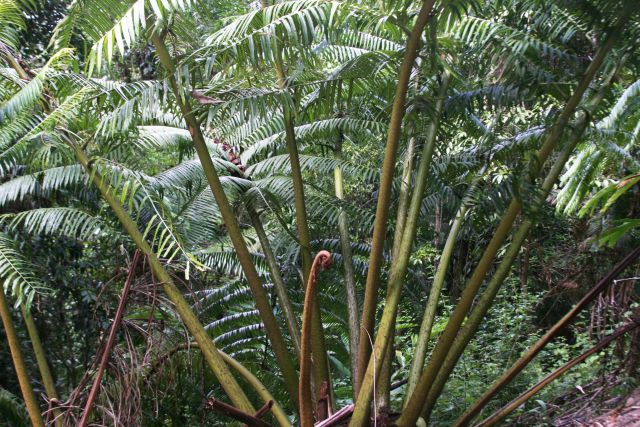 © WTMA
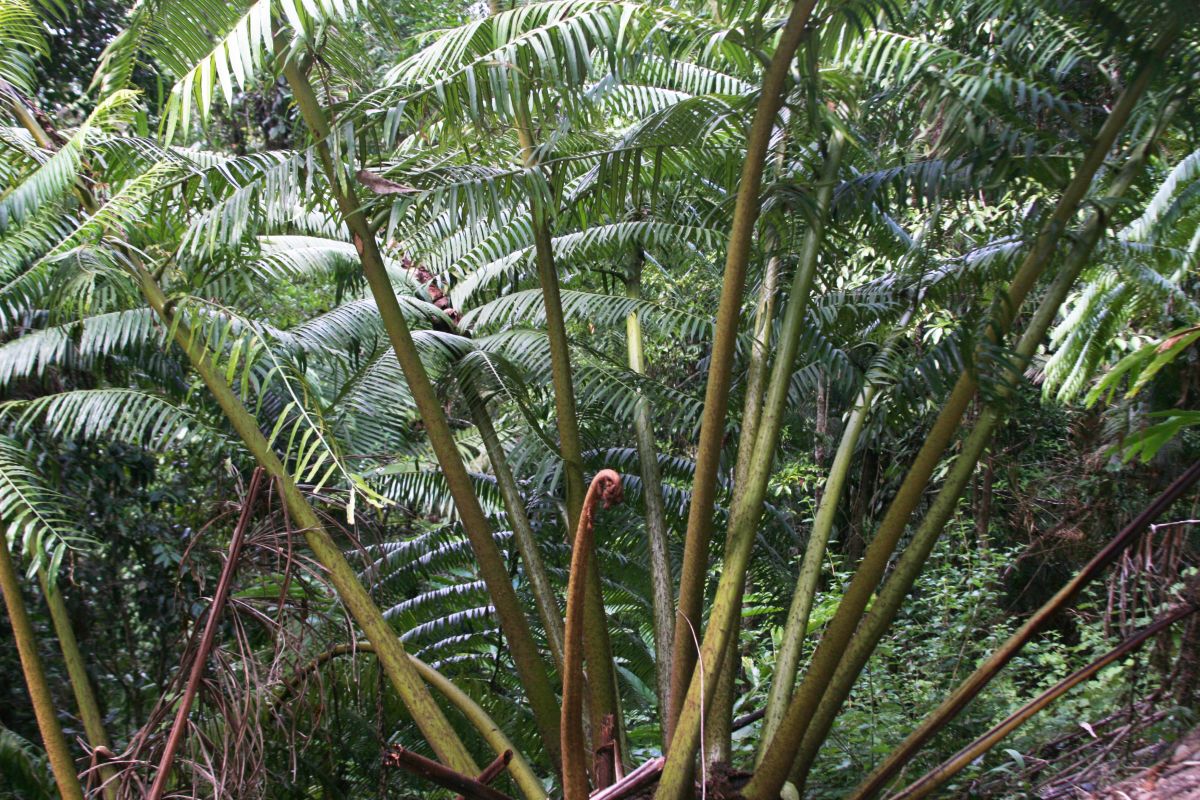
A 300-million-year survivor of the gradual drying out of the continent the King fern (Angiopteris evecta) reaches a mature height of up to 5m (small populations also exist in north-east Arnhem Land, NT)
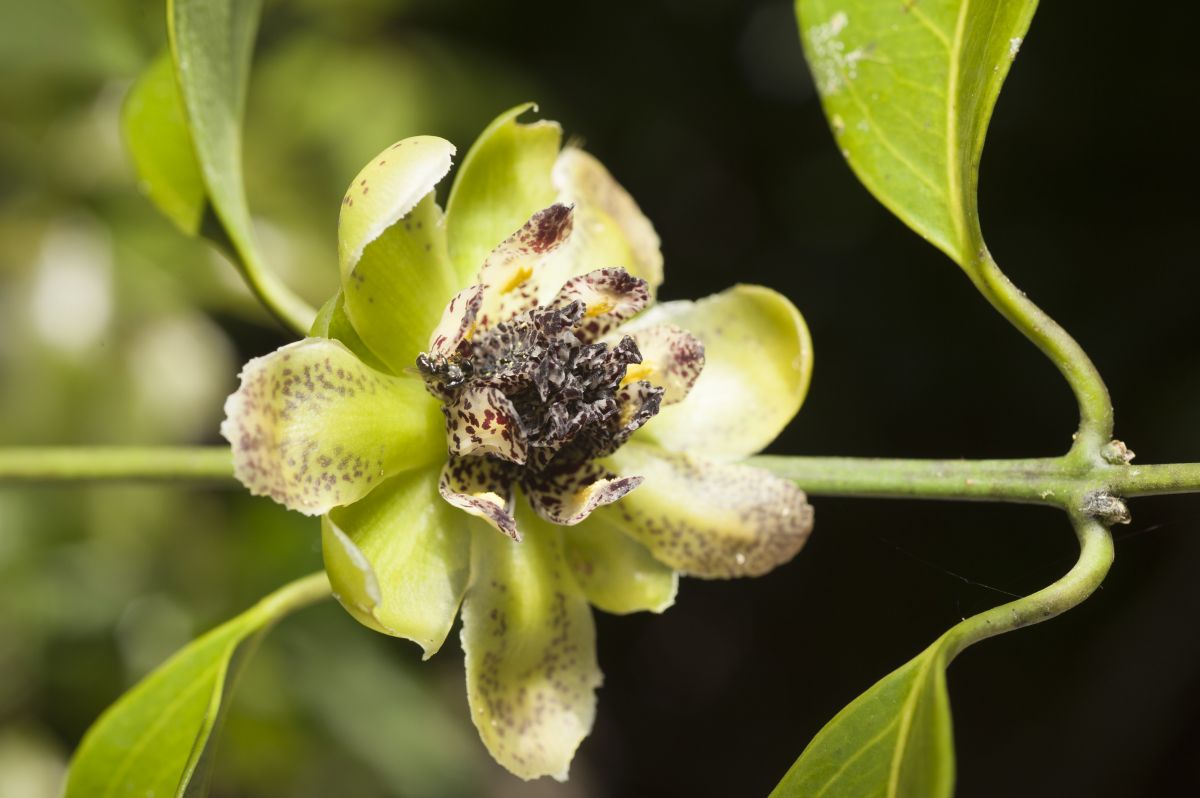
The Wet Tropics is recognised internationally as one of Australia's most important centres of plant diversity and endemism. The region supports over 4,300 vascular plant species of which 708 are endemic, that is, found nowhere outside of the Wet Tropics. These include species with restricted ranges and specialised habitat requirements, endemic and/or ancient species, considered relicts from the Gondwanan super continent, and highly specialised species or vulnerable and threatened species.
The Wet Tropics World Heritage Area contains one of the highest concentrations of ancient and endemic flowering plant families in the world, and this endemism is a key World Heritage value. Many of these species are restricted to very small areas, such as:
- a single mountain range or valley
- a particular elevation
- a specific rainforest type or soil type
- an isolated upland rainforest refuge.
These unique plants are a major reason the Wet Tropics is recognised as a World Heritage Area. Together they represent millions of years of evolution, with many species descended from ancient rainforest lineages that survived dramatic climate changes.
Why the Wet Tropics has so many endemic plants
The exceptional diversity of endemic plants reflects the region's long geological and climatic history. High levels of endemism have developed because of:
- the break-up of Gondwana and continental drift
- long-term climatic stability over millions of years
- isolation of rainforest refugia during past ice ages and periods of drying
- variations in rainfall, temperature, geology and altitude across relatively short distances
- complex landscapes ranging from coastal lowlands to mountain peaks above 1,600 metres.
These conditions have allowed plant populations to become isolated and evolve independently, producing many species found nowhere else on Earth.
Types of endemic plants
Endemic species occur throughout every layer of the rainforest and across many major plant groups. Many represent ancient evolutionary lineages that have survived in the Wet Tropics for millions of years, while others have evolved more recently in isolated mountain ranges and rainforest refuges.
Canopy and rainforest trees
The rainforest canopy contains several endemic trees that represent ancient evolutionary lineages and provide food, shelter and nesting habitat for rainforest wildlife.
Examples include:
- Idiot fruit (Idiospermum australiense), one of Australia's most ancient flowering trees. It survives naturally in only a handful of rainforest valleys between the Daintree and Bloomfield rivers and Harvey Creek–Russell River in the Bellenden Ker range.
- Atherton oak (Athertonia diversifolia), a distinctive rainforest tree confined to the uplands of North Queensland. Its large woody fruits provide food for native wildlife, including southern cassowaries.
- Noahdendron (Noahdendron nicholasii), is a rainforest tree with a highly restricted distribution in the Wet Tropics.
Understorey shrubs and small trees
The shaded understorey supports many endemic shrubs and small trees adapted to humid, low-light rainforest environments. These plants contribute to rainforest structure, provide food for insects and birds, and help maintain plant diversity beneath the canopy.
Examples include:
- Ryparosa kurrangii, a small rainforest tree endemic to the Wet Tropics restricted to the area between the Daintree River and Cape Tribulation. This tree has a southeast Asian ancestry and flowers on the trunk and branches; the fruit is eaten by cassowary.
- Haplostichanthus ramiflorus, an endemic understory tree in the custard apple family (Annonaceae) found in north-east Queensland rainforests.
Vines and climbers
Vines and climbing plants form an important part of rainforest ecosystems by linking the forest floor with the canopy and providing food and shelter for wildlife.
Examples include:
- Austrobaileya scandens, one of the world's most ancient surviving flowering plant lineages and endemic to the Wet Tropics.
- Pararistolochia deltantha, an endemic rainforest vine that is one of the many food plants for the caterpillar stage of the Cairns birdwing butterfly. This vine belongs to a primitive flowering plant family, one of the many families the Wet Tropics is famous for.
Ferns and fern allies
The Wet Tropics supports one of Australia's richest fern floras, including several species found nowhere else. These plants thrive in cool, moist rainforest habitats, mountain gullies and cloud forests.
Examples include:
- Cyathea celsa, an endemic tree fern of upland rainforest.
- Austroblechnum aequabile, one of several fern species largely restricted to Wet Tropics rainforests.
Cultural significance
For Rainforest Aboriginal Peoples, endemic plants form part of continuing cultural responsibility and connection to Country.
Plants contribute to:
- cultural practices and knowledge systems
- traditional foods, fibres and materials
- medicines and wellbeing
- maintaining relationships between people, Country and story.
This knowledge has been developed over thousands of generations and continues to guide caring for Country today.
Conservation of endemic plants
Many endemic plants occupy small geographic ranges or specialised habitats, making them particularly vulnerable to environmental change.
Key conservation priorities include:
- protecting intact rainforest habitat
- controlling invasive plants and animals
- managing plant diseases such as myrtle rust and phytophthora
- improving the resilience of upland rainforest ecosystems to climate change
- preventing further habitat fragmentation
- supporting long-term monitoring and scientific research.
Some endemic species are listed as threatened under Queensland or Australian legislation and require targeted recovery actions.
Accessing species information
There is no single fixed list of all endemic Wet Tropics plants. New species continue to be described, and scientific names are periodically revised as botanical research advances.
For authoritative information, consult:
- Queensland Government WildNet
- Australian Virtual Herbarium
- Australian Tropical Rainforest Plants
- Australian Tropical Ferns and Lycophytes
- Australian Tropical Orchids
These resources provide the most up-to-date taxonomy, distribution records and conservation information.
Protecting the Wet Tropics
Protecting endemic plants helps conserve one of the world's most significant tropical rainforest ecosystems.
Visitors can help by:
- staying on designated walking tracks
- not collecting plants, flowers or seeds
- following advice in national parks and other protected areas
- cleaning footwear and equipment to reduce the spread of plant diseases
- supporting responsible and sustainable visitation.
Every endemic plant represents an irreplaceable part of the Wet Tropics' natural heritage, and protecting these species helps safeguard the biodiversity and ecological resilience of the World Heritage Area for future generations.
Last updated: 13 Oct 2026