
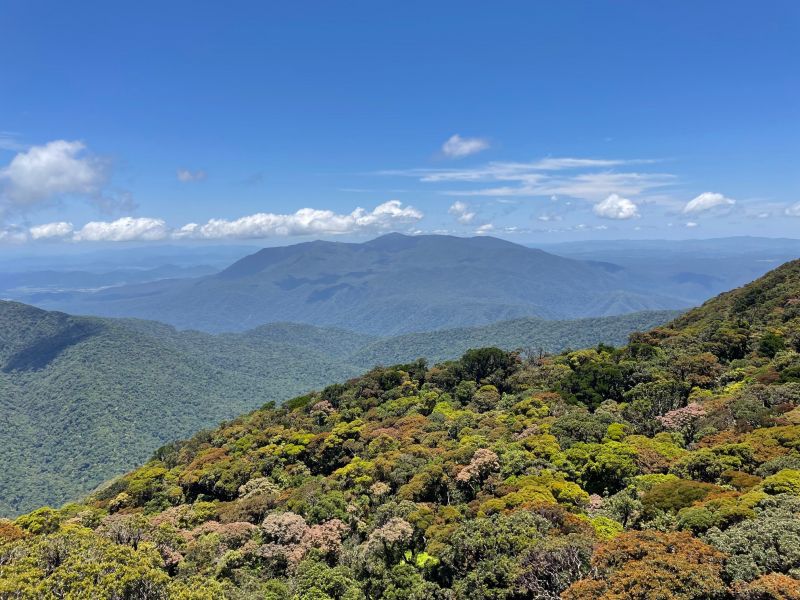
Plants before flowers
Mosses, liverworts and hornworts (non-vasular plants)
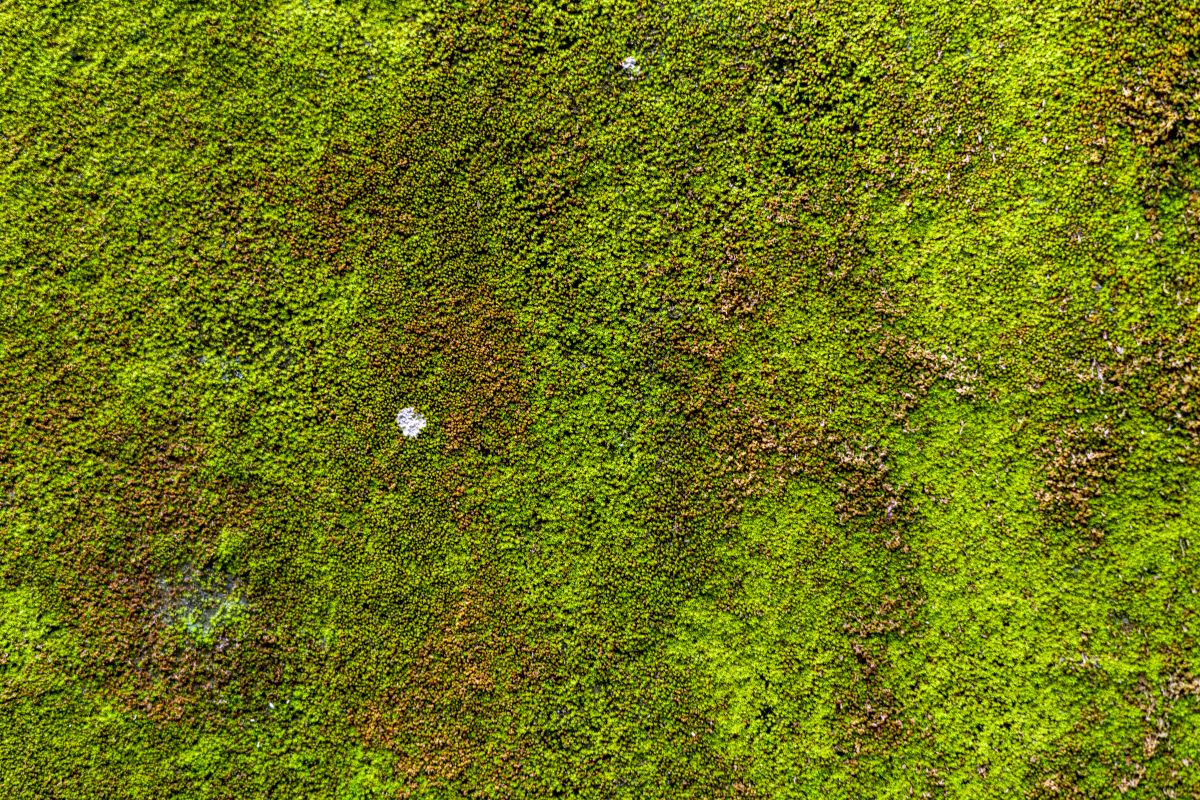
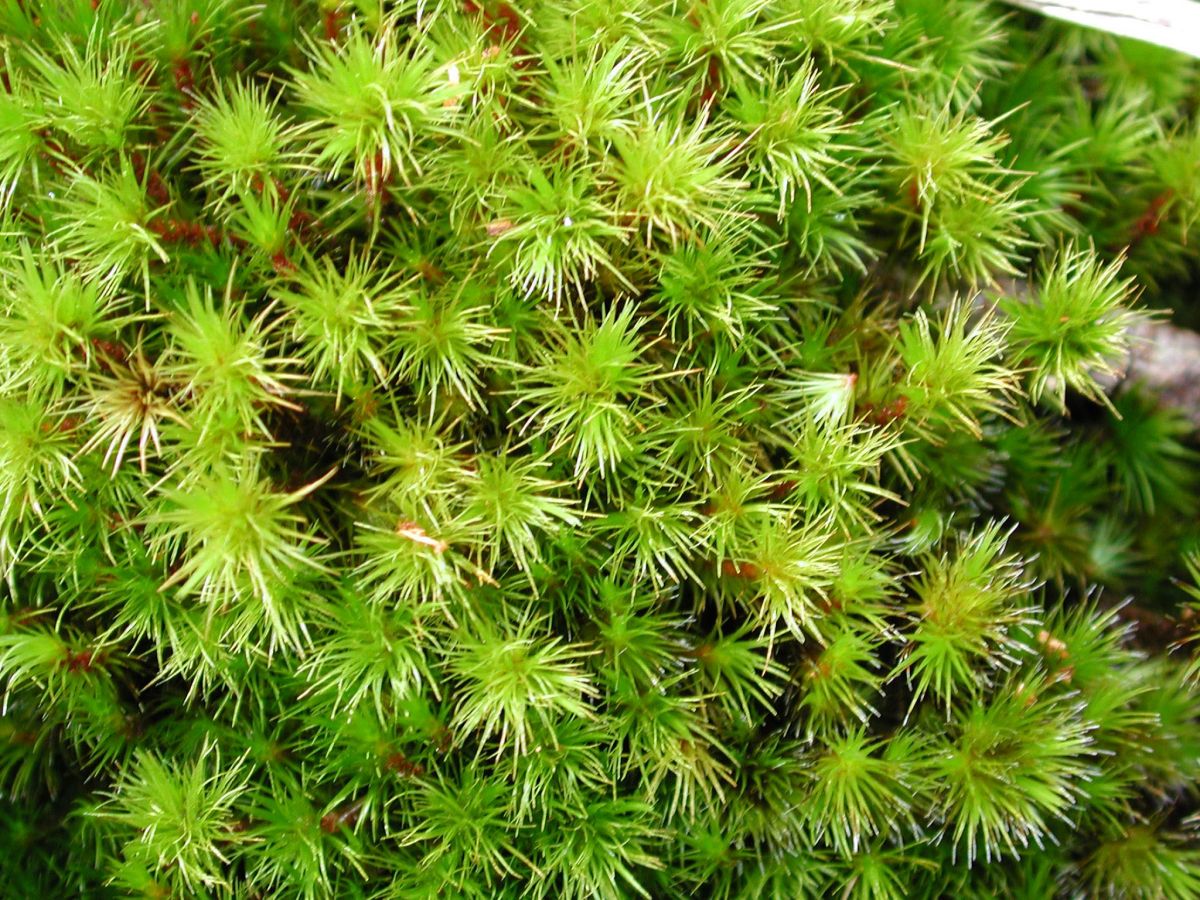
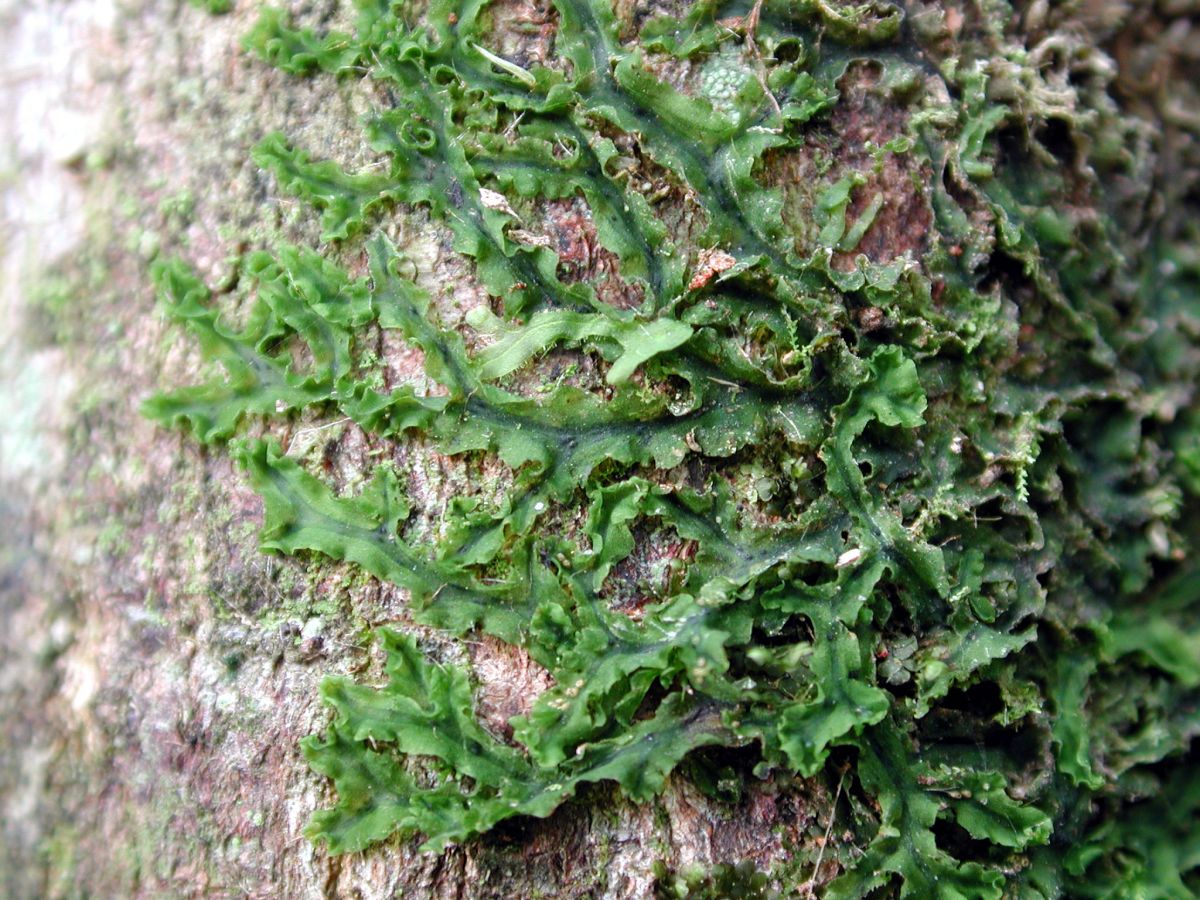
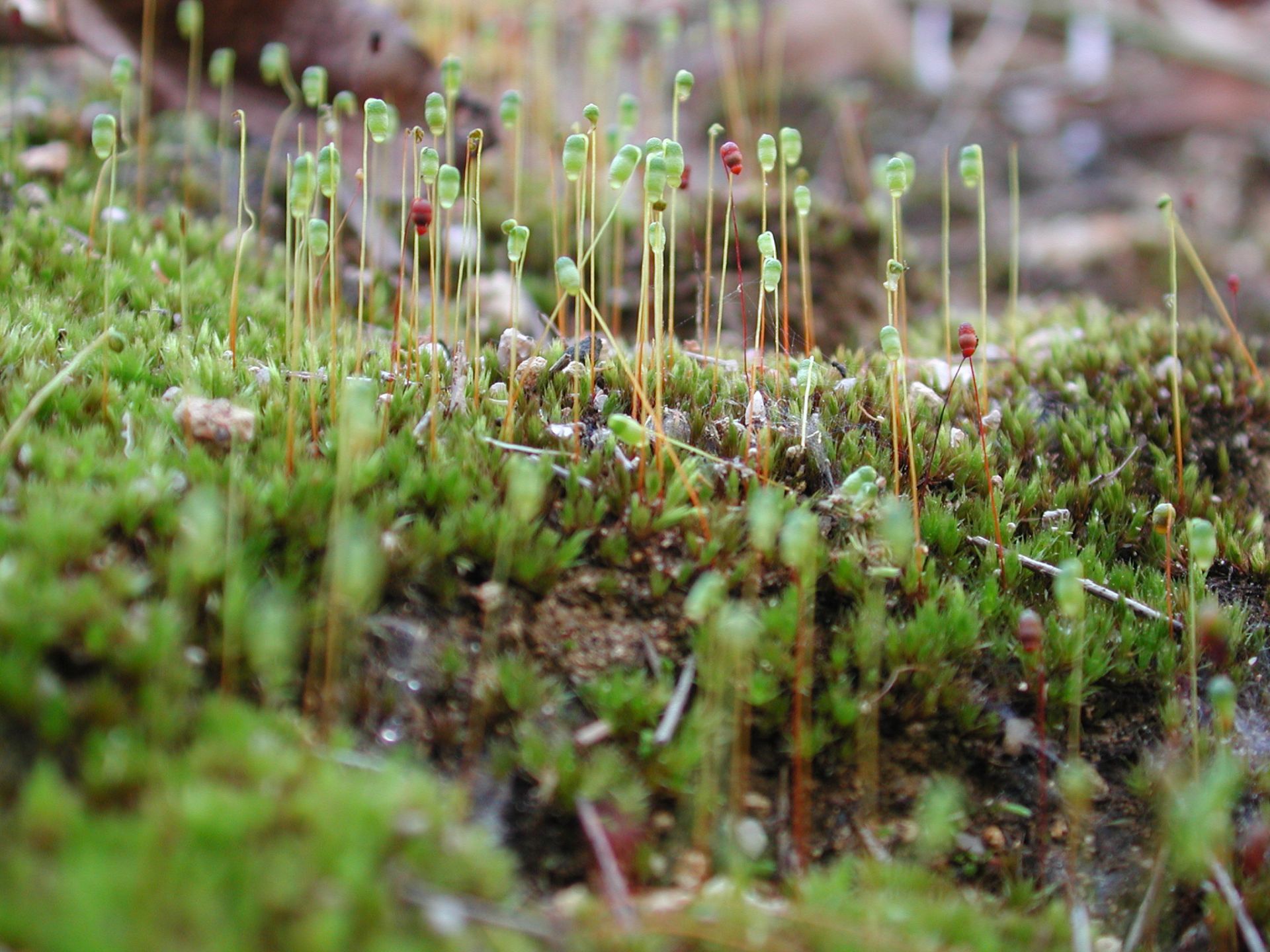
Some of the earliest plants to colonise land were simple, non-vascular plants such as mosses, liverworts and hornworts.
-
 © WTMA
Mosses, liverworts and hornworts
These tiny plants do not have true roots, stems or leaves and absorb water directly through their surfaces like a sponge.
Although small, they play an important role in keeping rainforest ecosystems healthy by:
- Storing moisture: Acting like natural sponges that absorb and hold large amounts of water.
- Recycling nutrients: Trapping and recycling nutrients washed down from the rainforest canopy.
- Protecting soil: Helping hold soil in place and reducing erosion on steep slopes.
Ferns and lycophytes (seedless vascular plants)
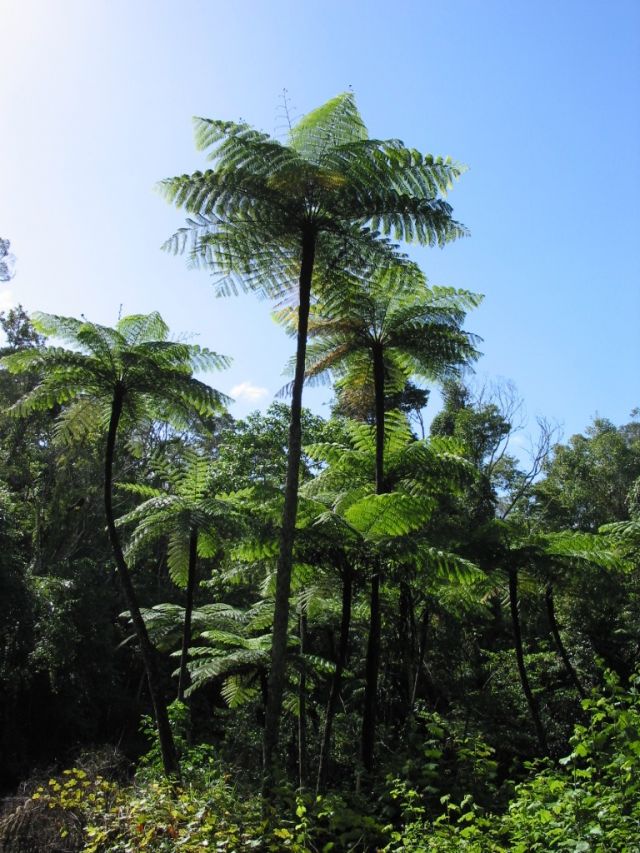
The Wet Tropics contains around 65% of Australia’s fern species, including about 40 species found nowhere else in the world
-
 © WTMA
Tree ferns -
 © Campbell Clarke
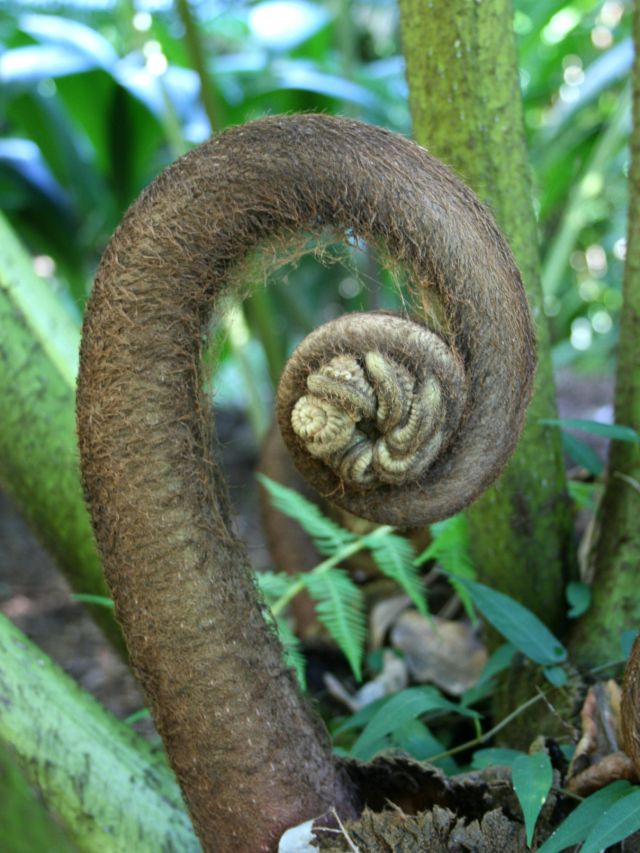
King fern (Angiopteris evecta) frond
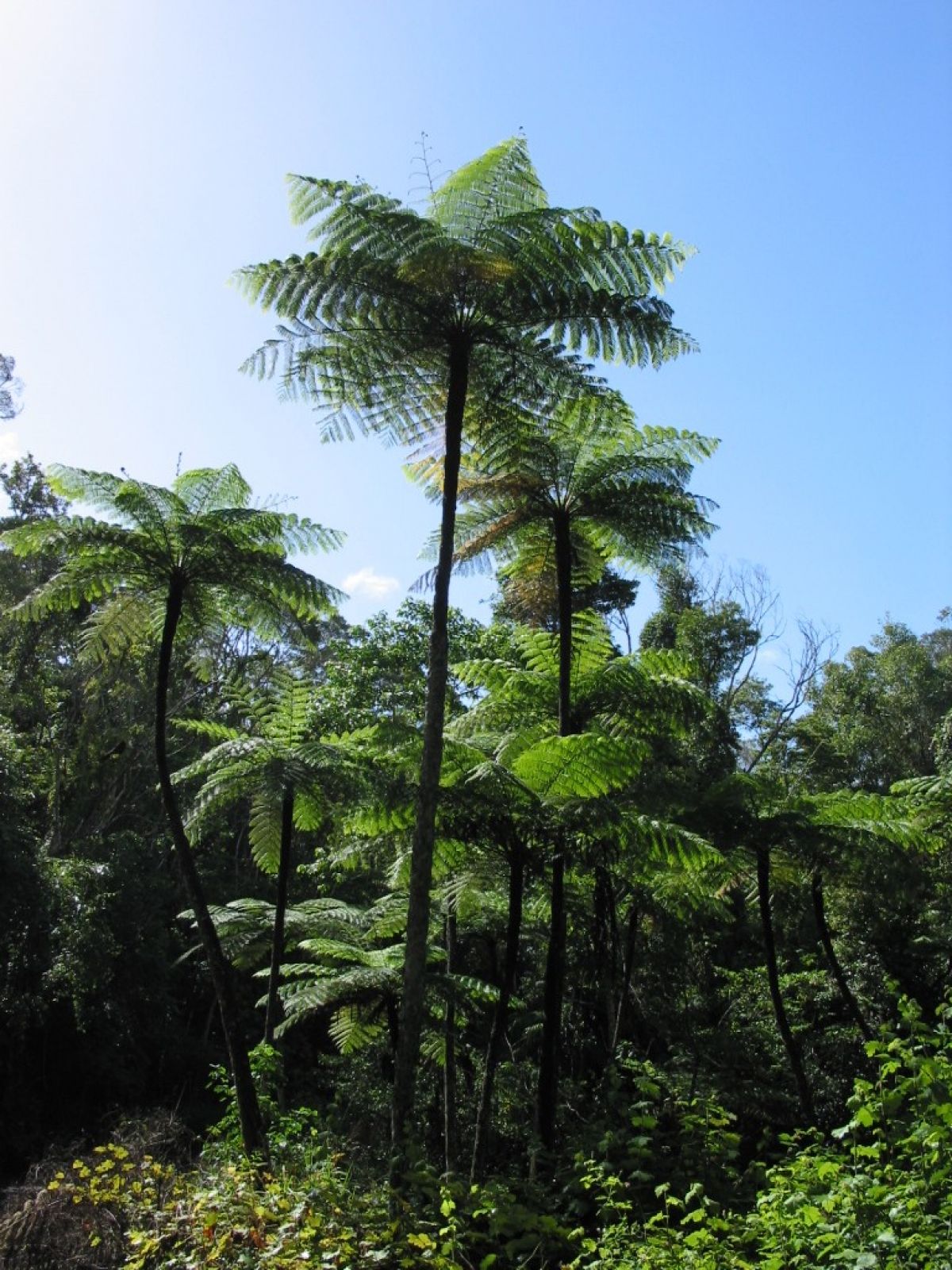
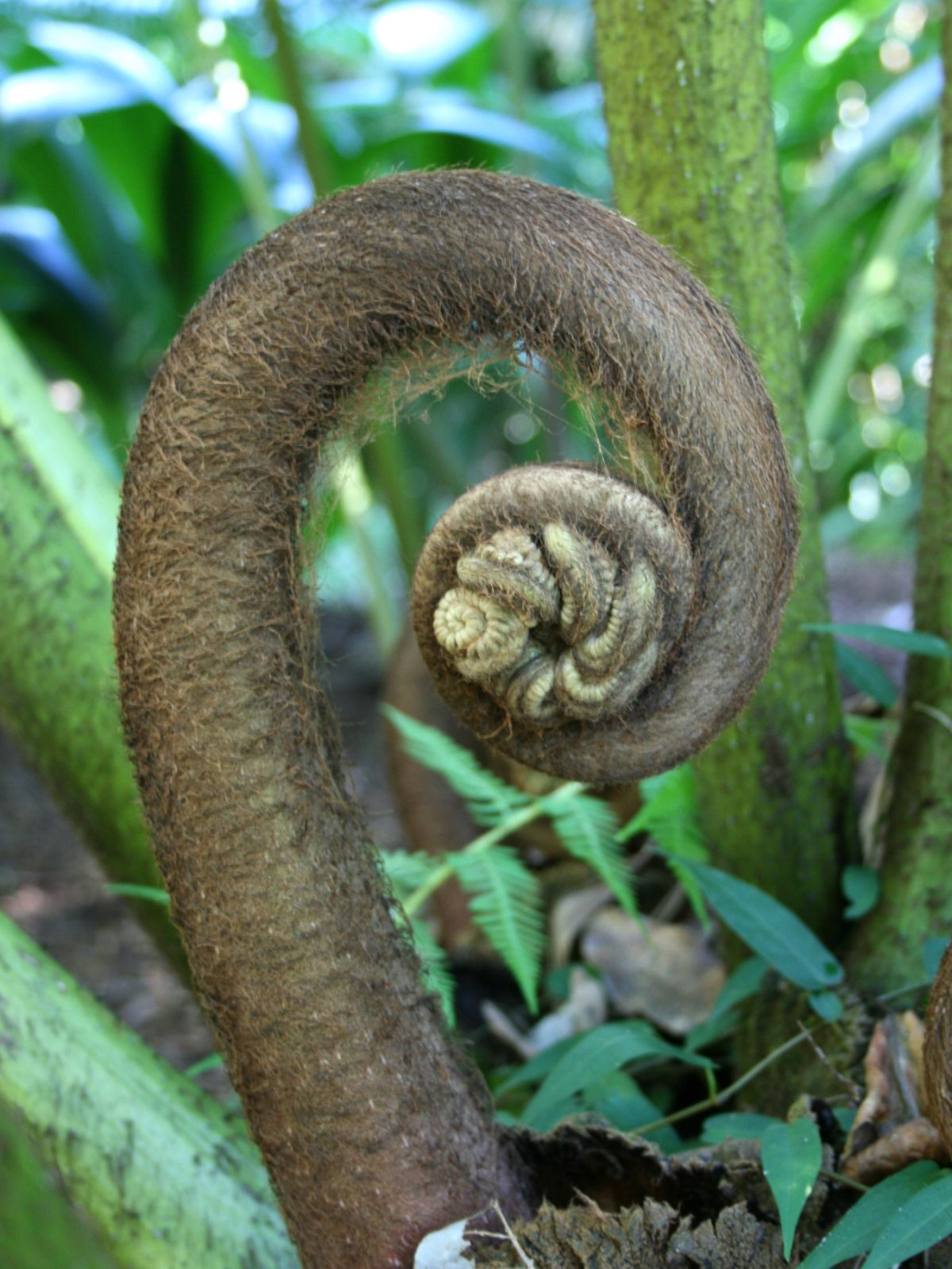
The region's warm, wet climate supports an extraordinary variety of ferns and lycophytes, from giant tree ferns and species that grow high in the rainforest canopy to primitive ground-creeping lycophytes. Lycophytes produced the first trees on earth and are responsible for much of the coal we use today.
-
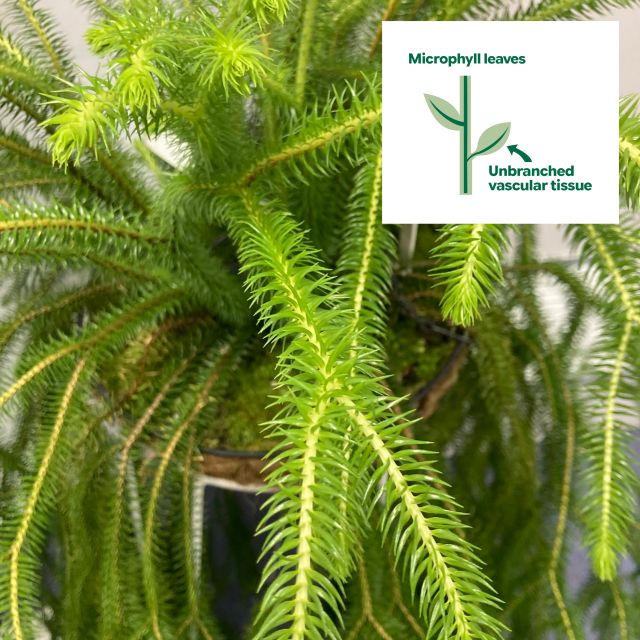 © WTMA
Lycophytes
- Microphyll leaves
- Unbranched vascular tissue
-
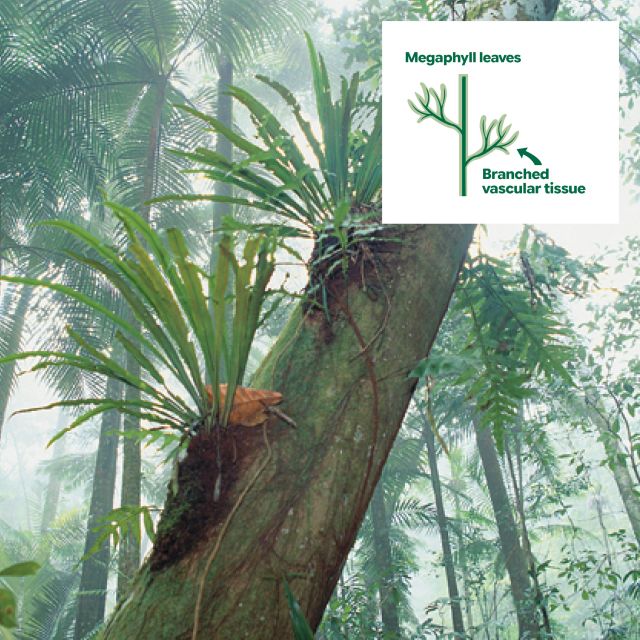 © Jack Hasenpusch
Ferns
- Megaphyll leaves
- Branched vascular tissue
Lycophytes first appeared more than 420 million years ago and were among the earliest plants to develop a vascular system, an internal network that moves water and nutrients from roots to leaves. This important evolutionary breakthrough allowed plants to grow larger and survive in a wider range of environments.
Ferns first appeared 380-390 million years ago, utilising the vascular system to develop true leaves and roots.
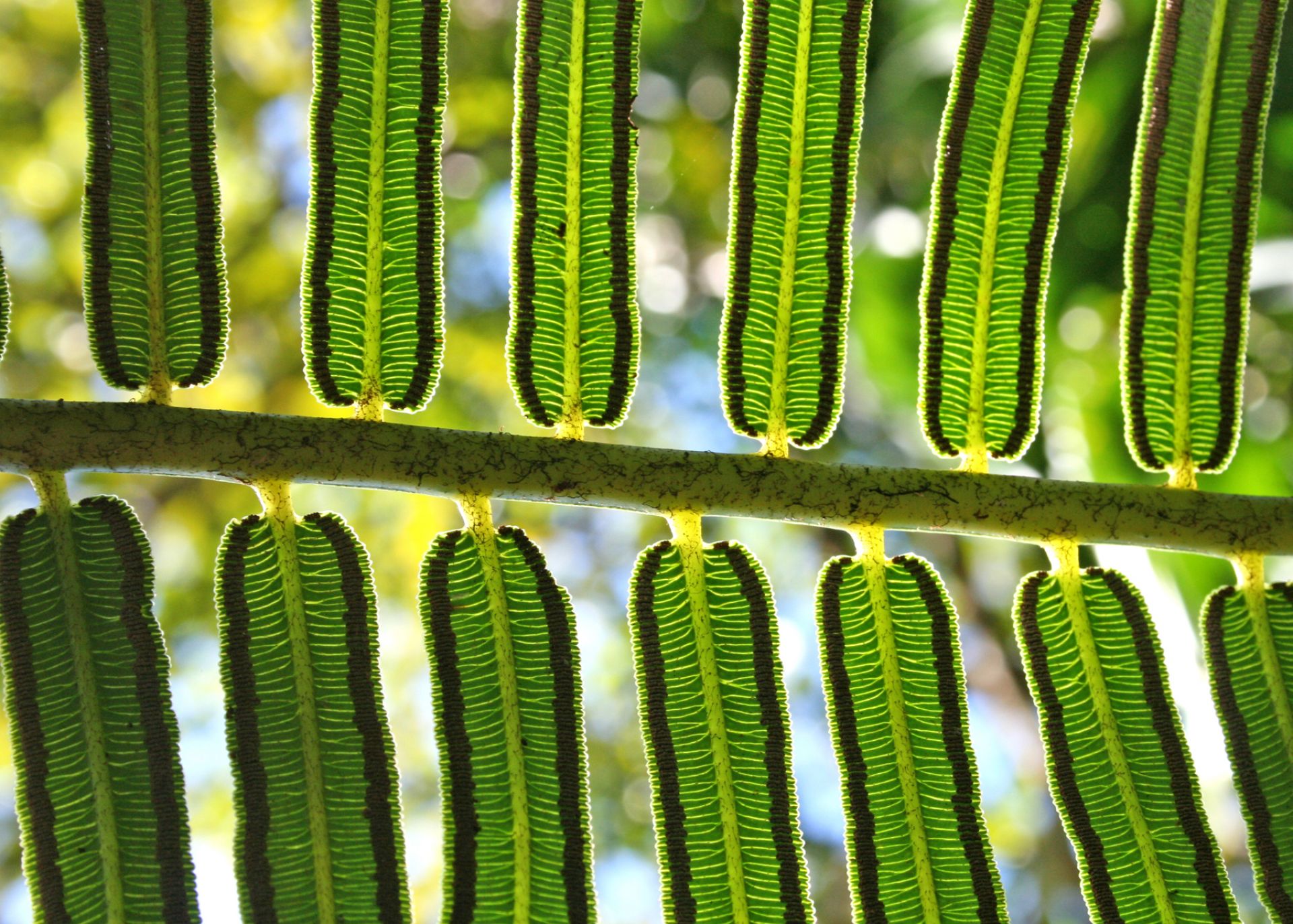
Ferns and lycophytes reproduce using spores, tiny structures that grow into an intermediate stage of a plant that then develops into the adult plant; rather than seeds. While much of Australia is too dry for many fern species, the year-round moisture of the Wet Tropics has created ideal conditions for them to thrive, resulting in the greatest diversity of ferns and lycophytes anywhere in Australia.
Gymnosperms (seed-producing plants)
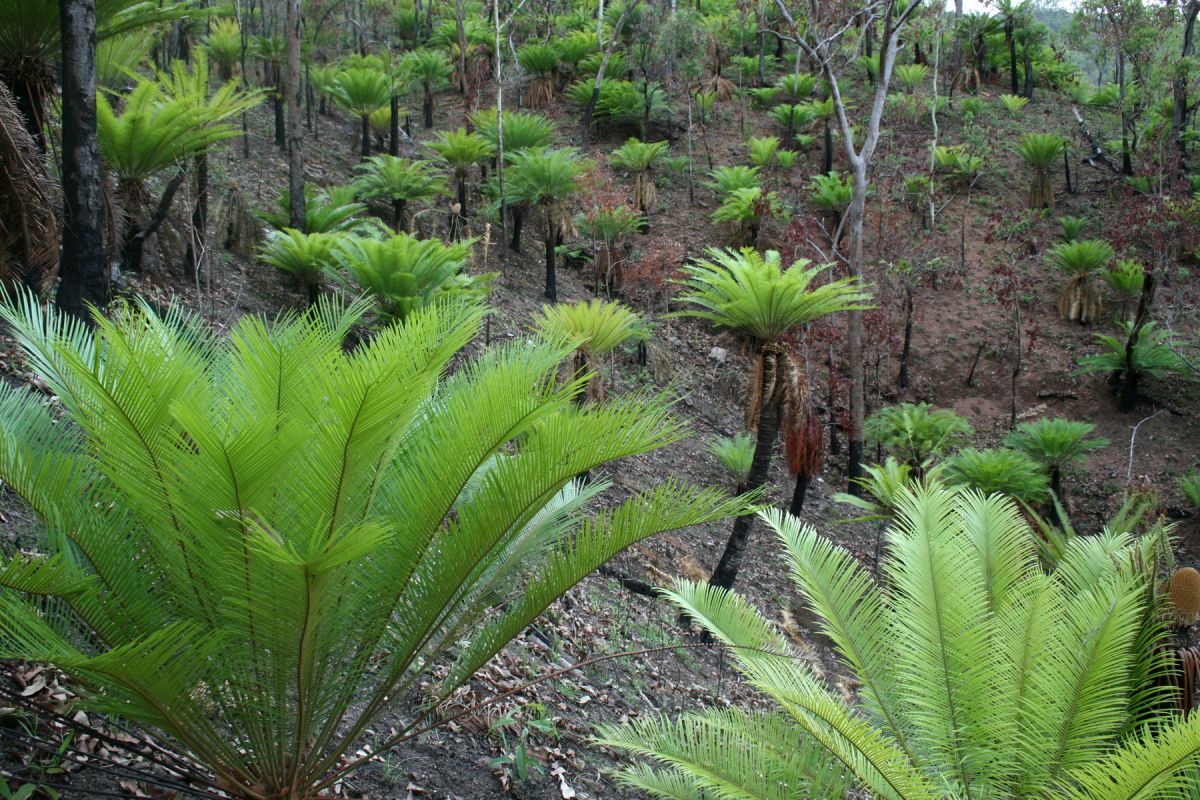
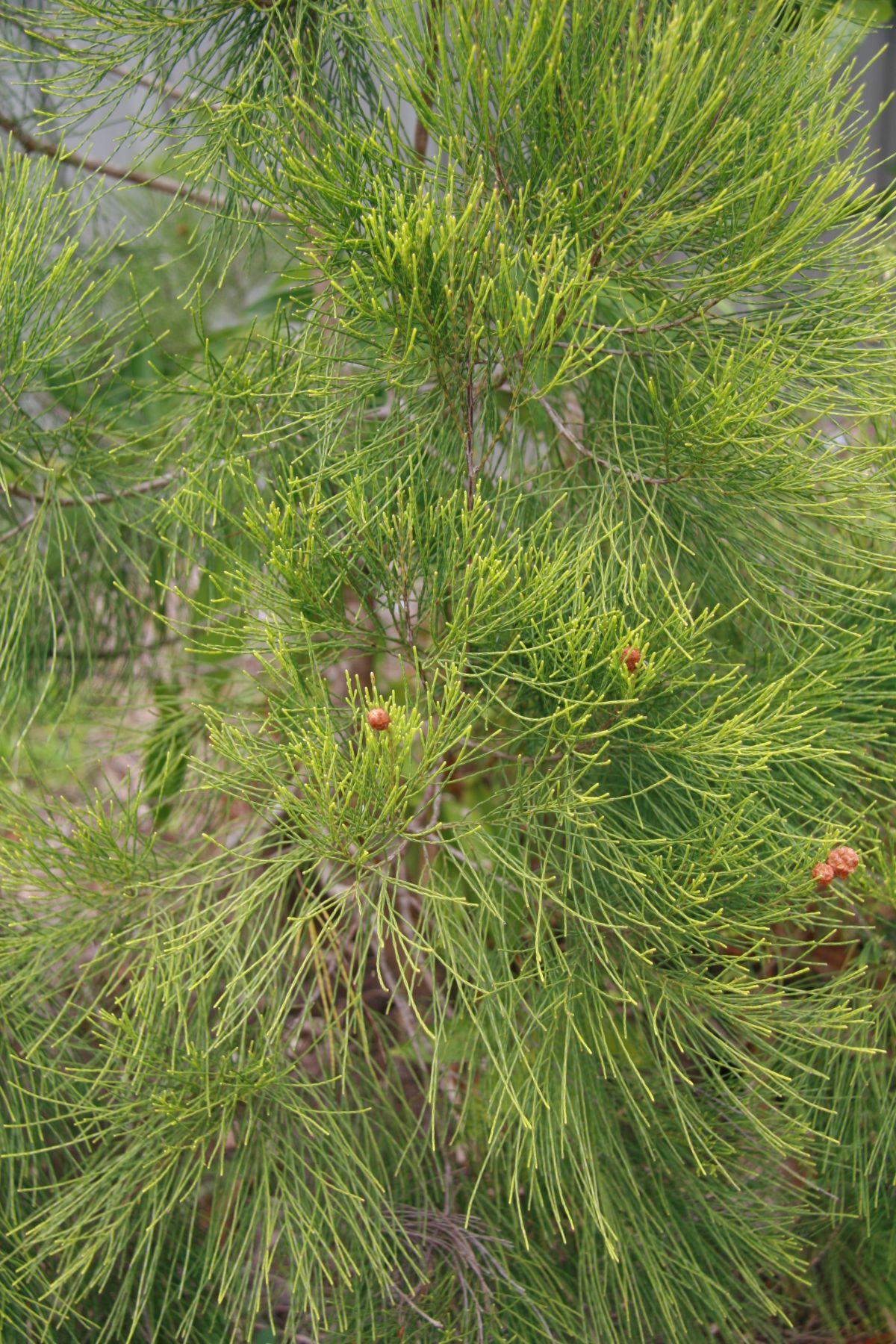
Gymnosperms are seed plants, and include the conifers such as bunya pines, kauri pines and podocarps, as well as cycads.
-
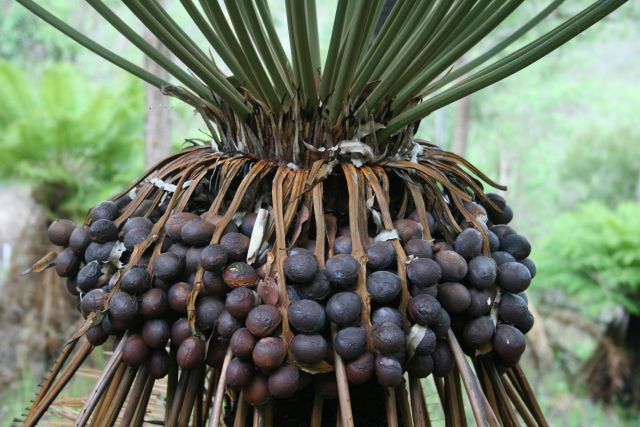 © Campbell Clarke
Cycad fruiting -
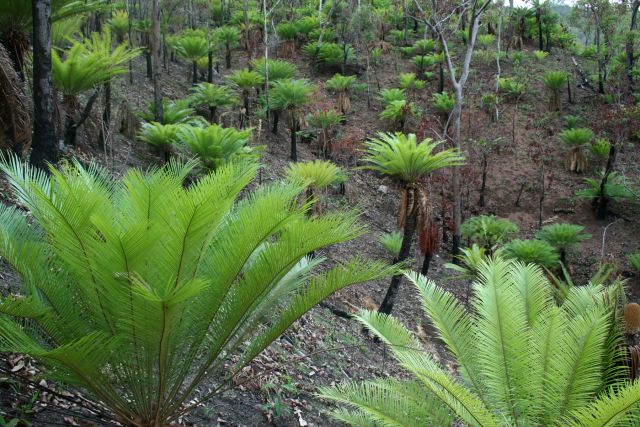 © Campbell Clarke
Cycads after bushfire on Gillies Range -
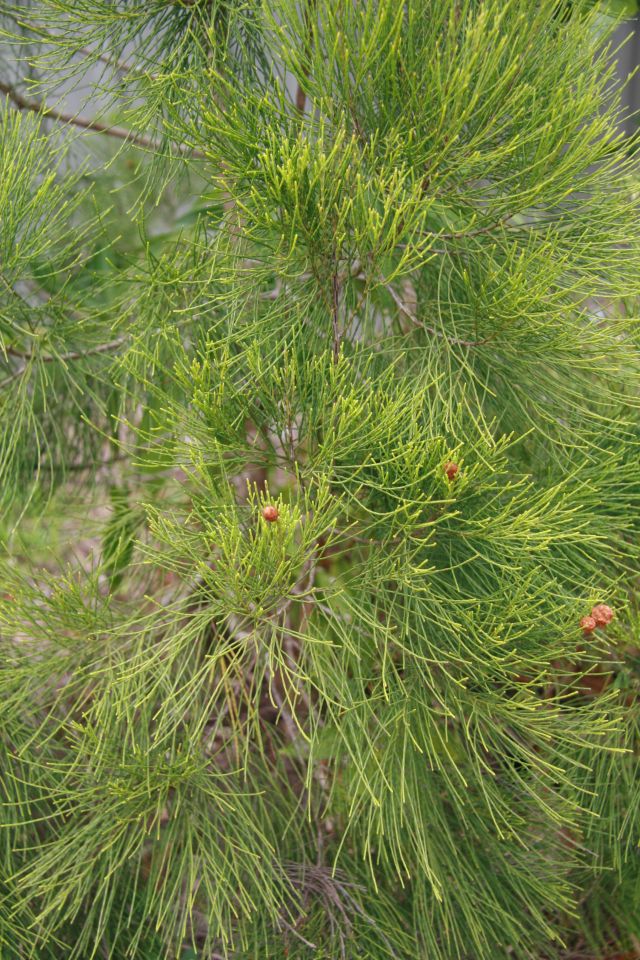 © WTMA
Daintree pine (Gymnostoma australianum)
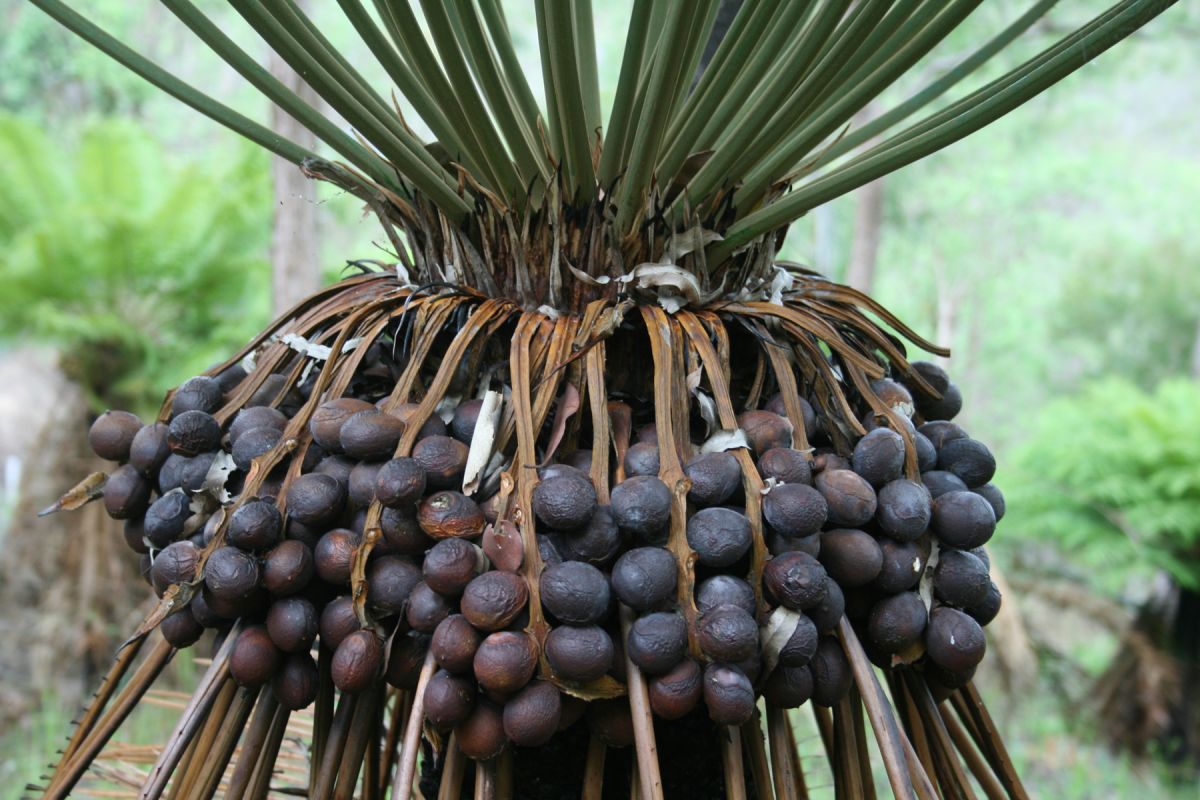
The next major step in plant evolution was the development of seeds. Seeds protected young plants from drying out and provided a food supply, allowing them to survive until conditions were right for growth. Seeds are a plant embryo in a lunch box. This important adaptation helped plants spread into new environments across the world and become more successful on land.
Seed-bearing plants first evolved around 350 to 320 million years ago. Today, the Wet Tropics contains the greatest diversity of gymnosperms in Australia. Three of Australia’s four cycad genera occur here: Cycas spp. (Cycadaceae), which is common in drier landscapes; Bowenia spectabilis (Zamiaceae), a small cycad found in rainforest habitats; and Lepidozamia hopei (Zamiaceae), one of the world’s tallest cycads, which can grow to more than 18 metres high.
Flowering plants
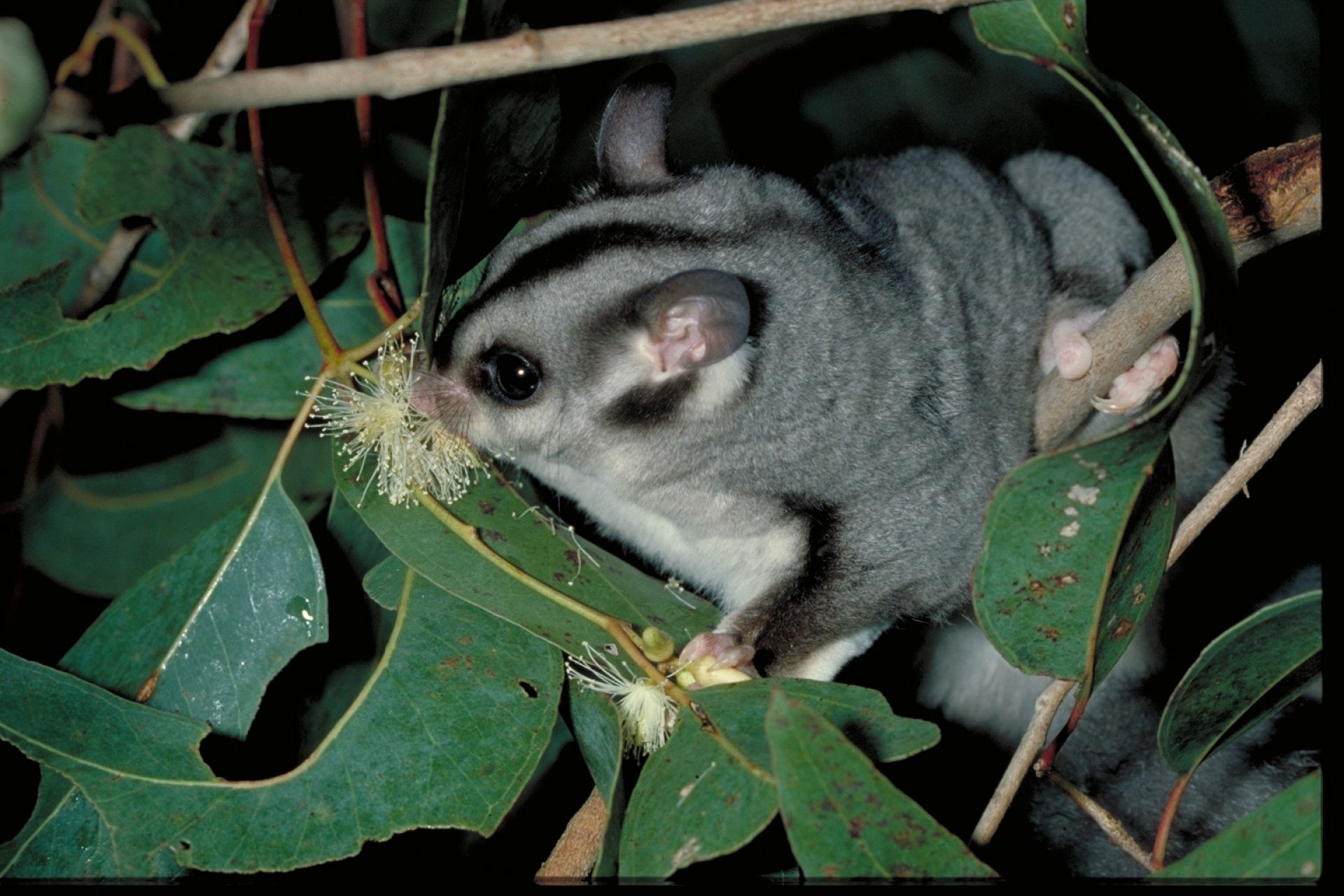
Flowering plants (or angiosperms) are the most diverse group of land plants, with more than 390,900 species described worldwide.
-
 © WTMA
The power of flowers
Flowers attract pollinators such as insects, birds and bats. They also have a highly efficient vascular system and a shortened gap between pollination and fertilization from just a matter of hours or days. This allowed angiosperms to reproduce quickly. Their fruits protect seeds and often encourage animals to spread them to new locations.
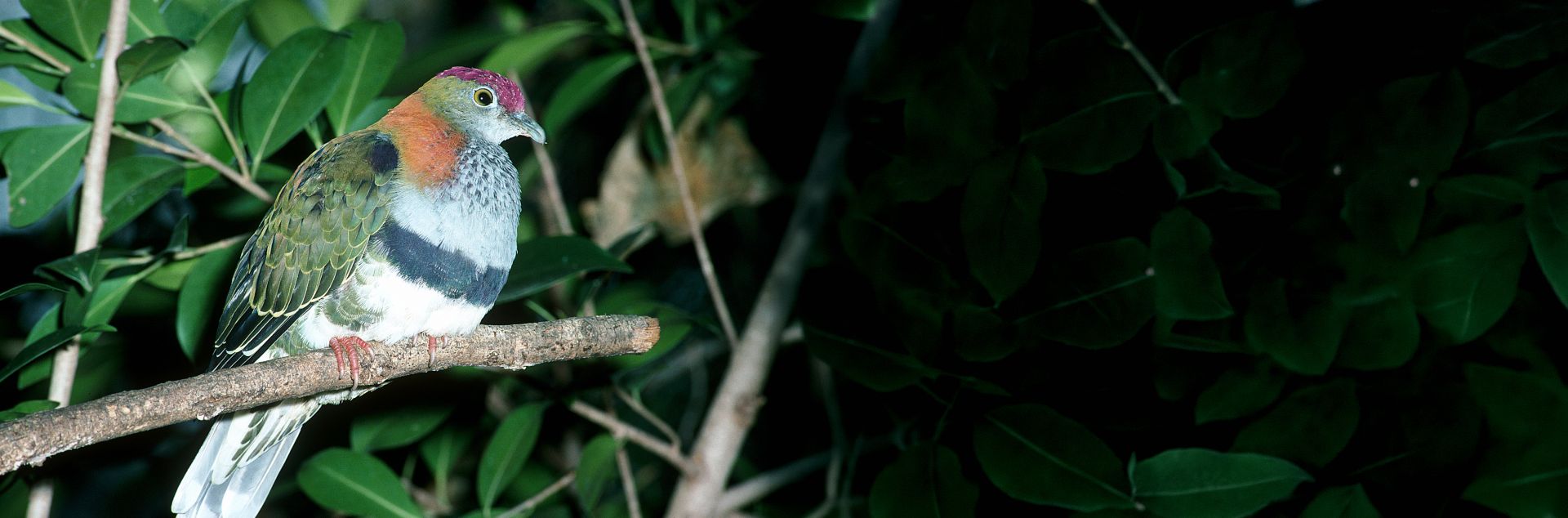
Because of these adaptations, flowering plants became the most successful group of plants on Earth. Most of the plants we see in rainforests today belong to this group.
-
 © WTMA
Shaping biodiversity
Rainforests are important refuges for many ancient flowering plant groups that have disappeared from drier parts of the world. Over millions of years, flowering plants and animals have evolved together. Plants developed flowers, nectar and fruits to attract pollinators and seed dispersers, while many insects, birds and mammals evolved specialised behaviours and physical features to feed on them. These close relationships have helped shape the remarkable diversity of life found in the Wet Tropics today.
-
 © Campbell Clarke
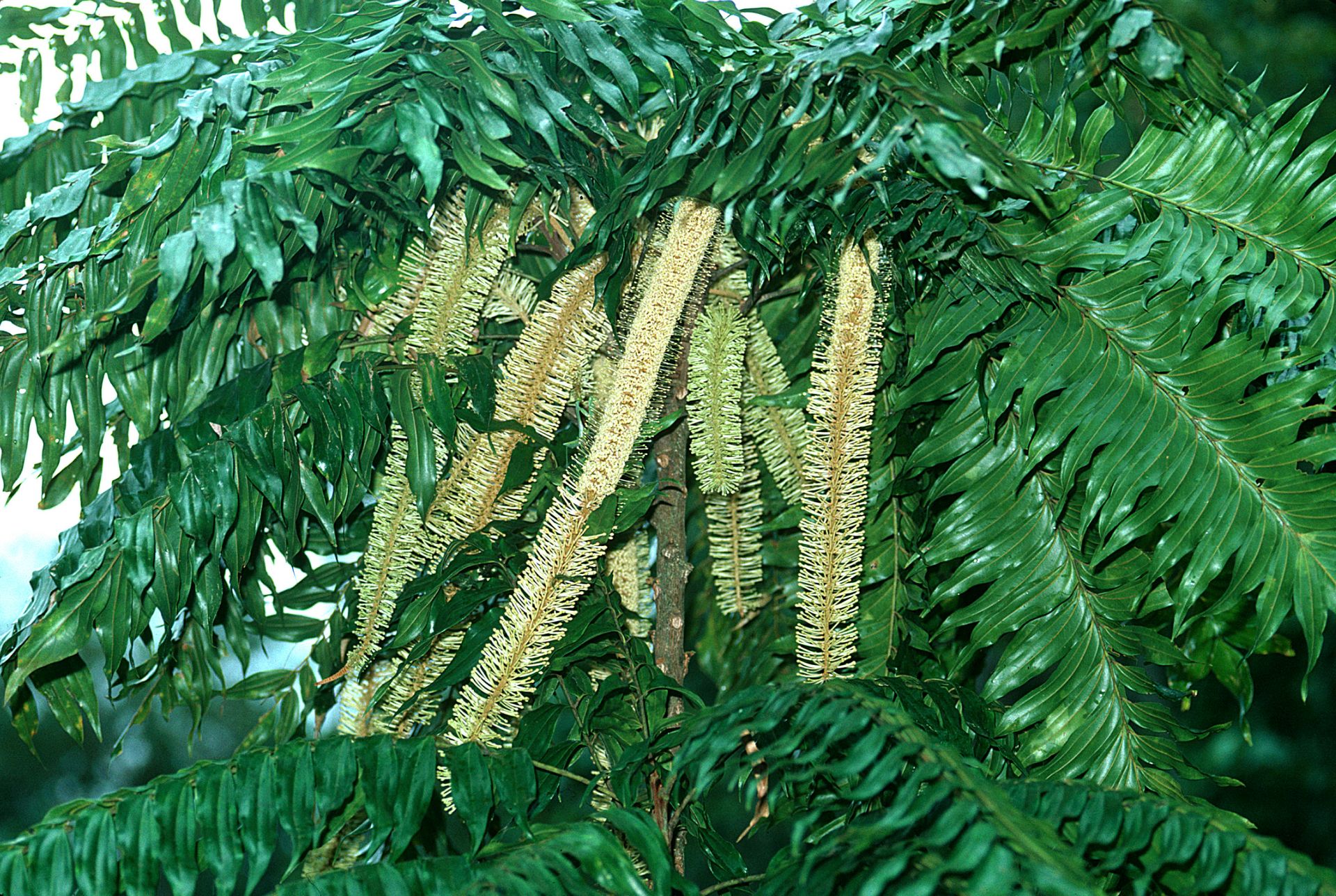
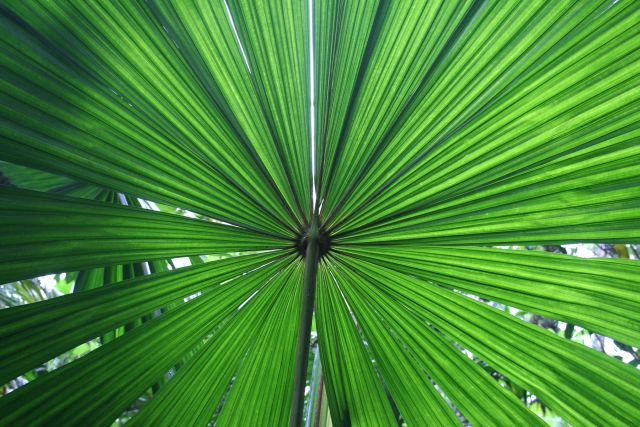
Endemic plants
Discover the endemic plants of the Wet Tropics, including ancient rainforest species found nowhere else on Earth and why they are important to biodiversity and World Heritage.
-
 © WTMA
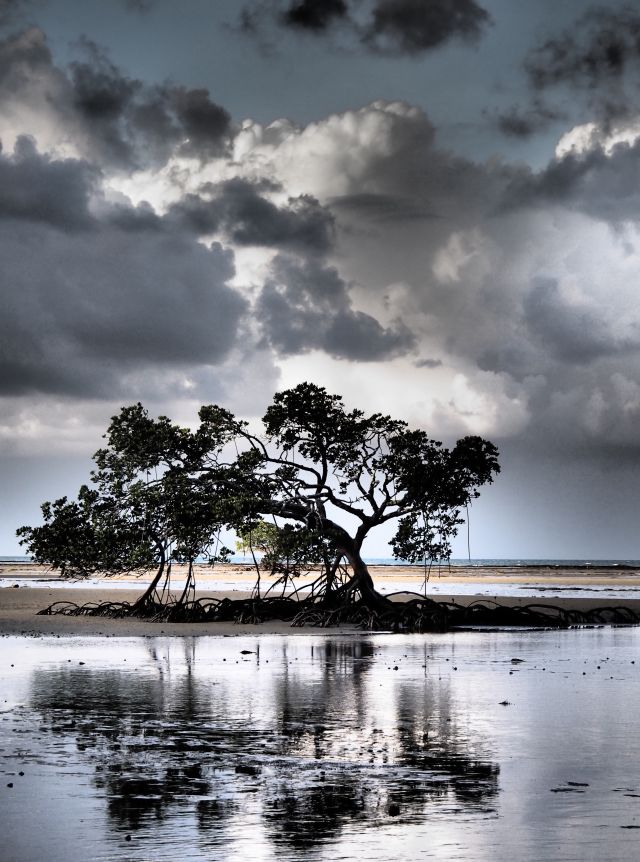
Vegetation communities
Explore the diverse vegetation communities of the Wet Tropics World Heritage Area, from rainforest and wet sclerophyll forests to woodlands, wetlands and mangroves. Learn how rainfall, terrain and soils shape the region’s distinctive plant communities and ecosystems.
-
 © WTMA
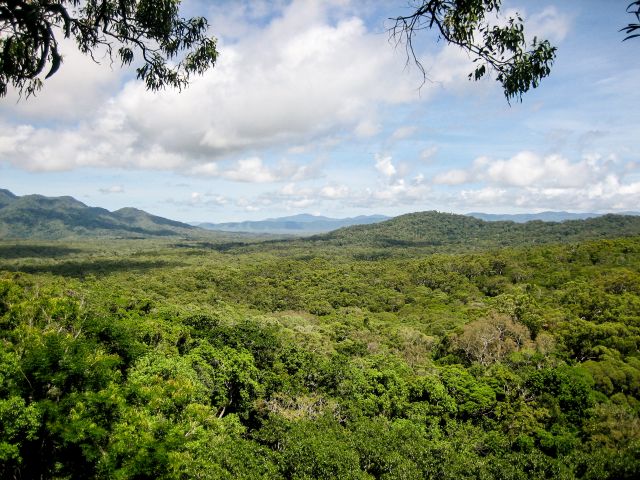
Wet Tropics vegetation mapping
Explore detailed vegetation maps of the Wet Tropics bioregion, identifying 250 vegetation communities across the region. Download 1:50,000 vegetation maps and learn about the Wet Tropics vegetation.
-
 © WTMA/Kerry Trapnell
Plants
Discover the ancient plants of the Wet Tropics and their importance to rainforest biodiversity and culture.
Last updated: 13 Oct 2026