
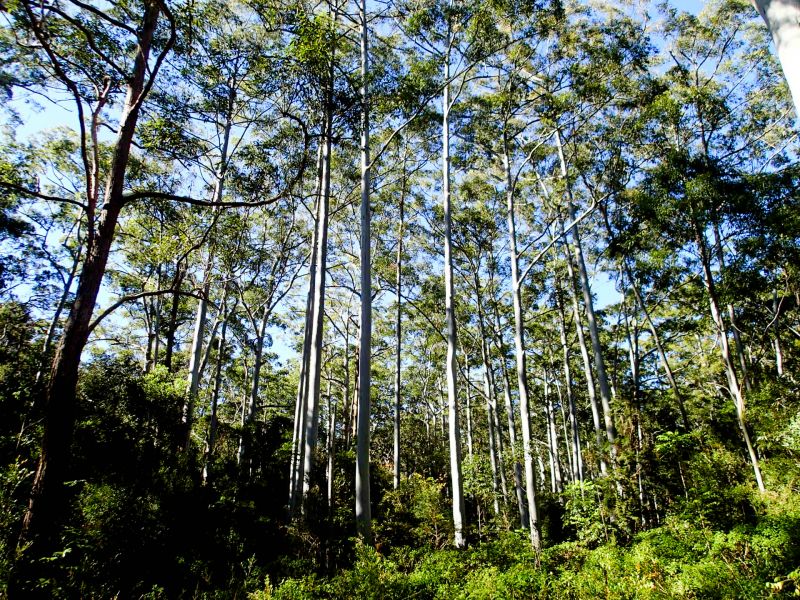
The Wet Tropics is home to a wide range of plant communities. While much of the World Heritage Area is lush rainforest, it also contains significant wet and dry sclerophyll forests and woodlands, swamp paperbark forests, wetlands, mangroves, heathlands, sedgelands, grasslands and rock pavements.
Many of the distinctive Wet Tropics vegetation communities are related to the diversity of rainfall, terrain and soils. The mean annual rainfall ranges from 1,200mm to over 8,000 mm (on Bartle Frere and Bellenden Ker). The rainfall is distinctly seasonal with over 60% falling in the summer months of December to March. Compared with other tropical rainforests of the world, the wetter parts of the region are extremely wet.
The Wet Tropics vegetation mapping details the distribution of the region’s vegetation communities.
-
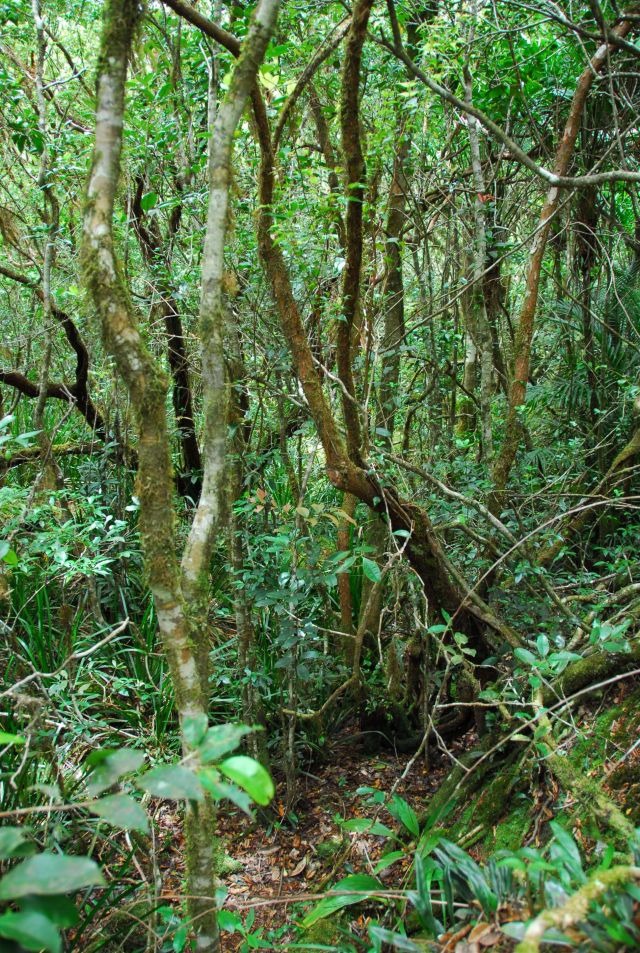 © WTMA/Dan Metcalfe
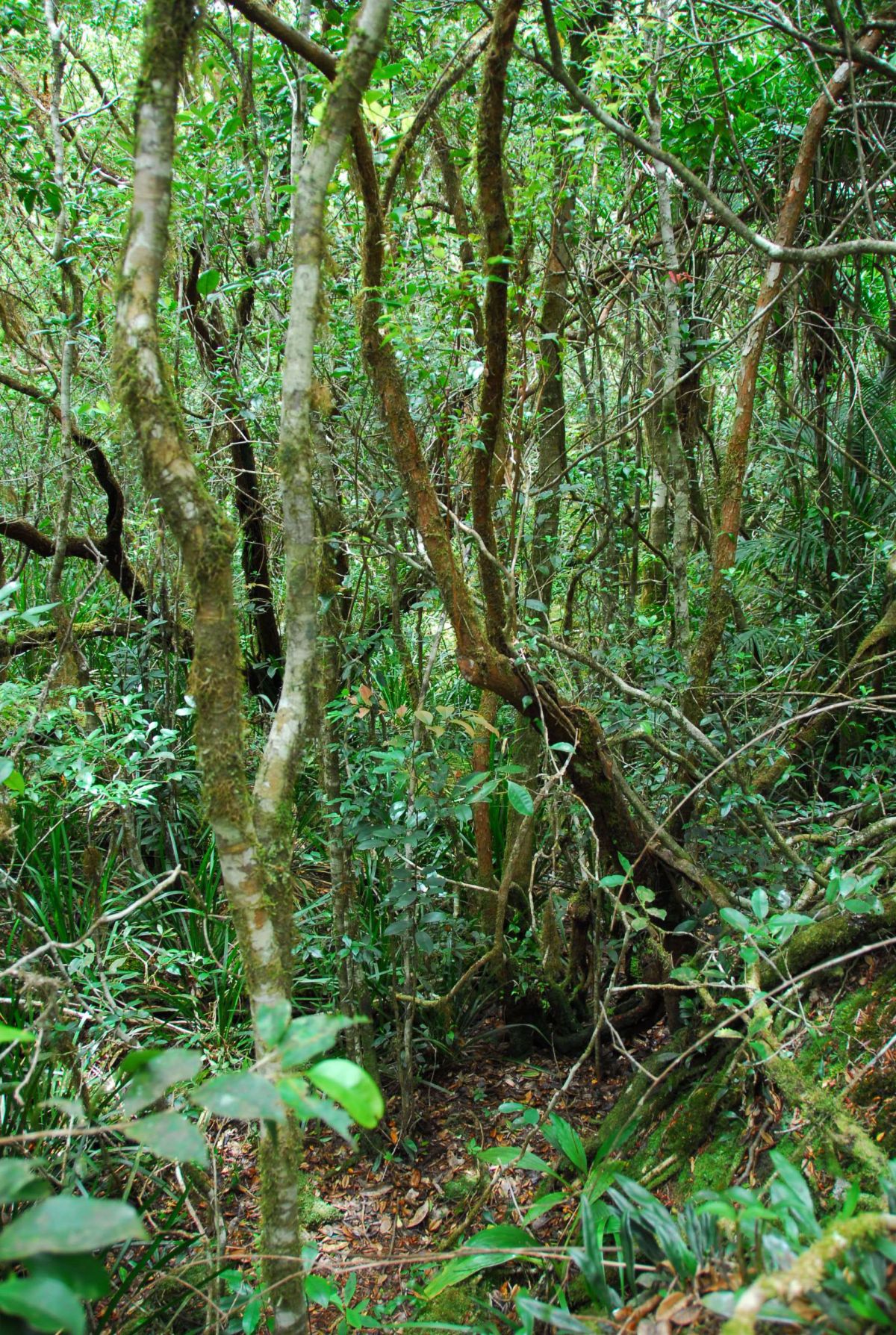
Wind sheared notophyll rainforest (vine-forest) on Mt Lewis -
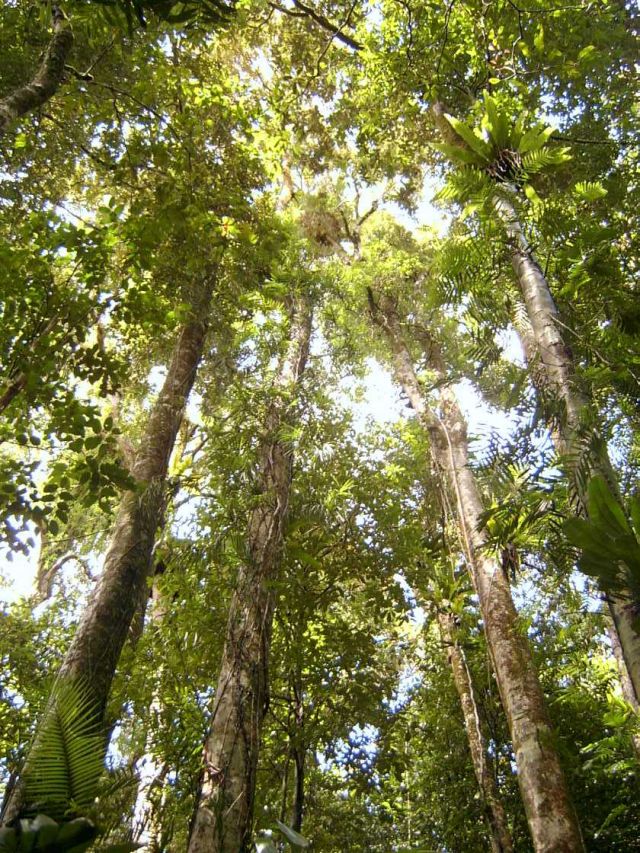 © WTMA
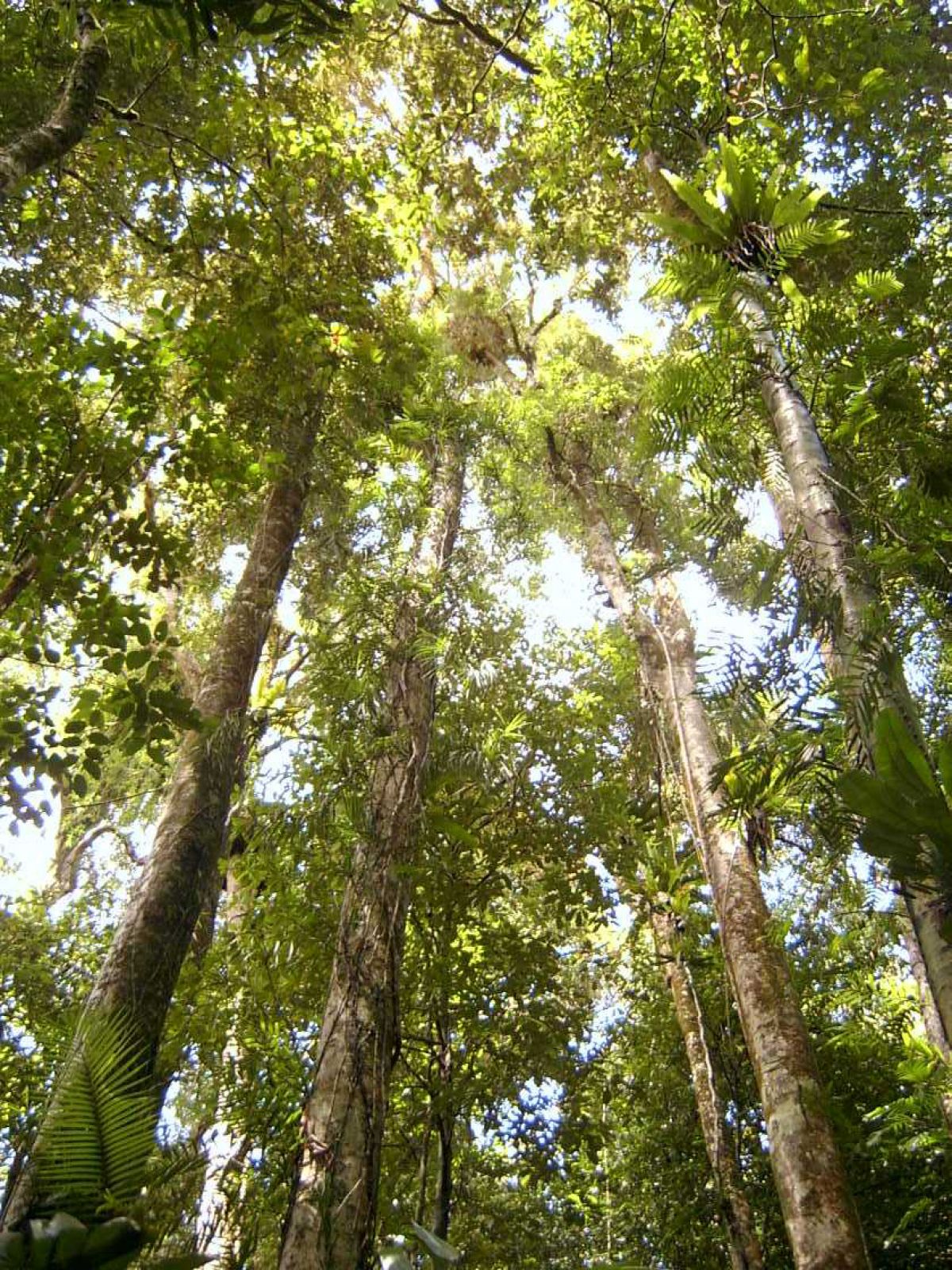
Complex mesophyll vine forest -
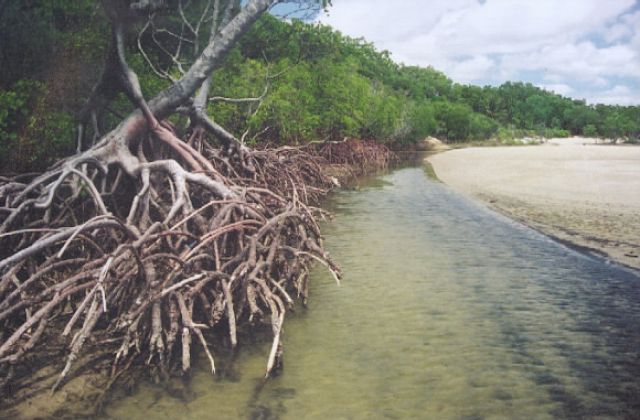 © WTMA
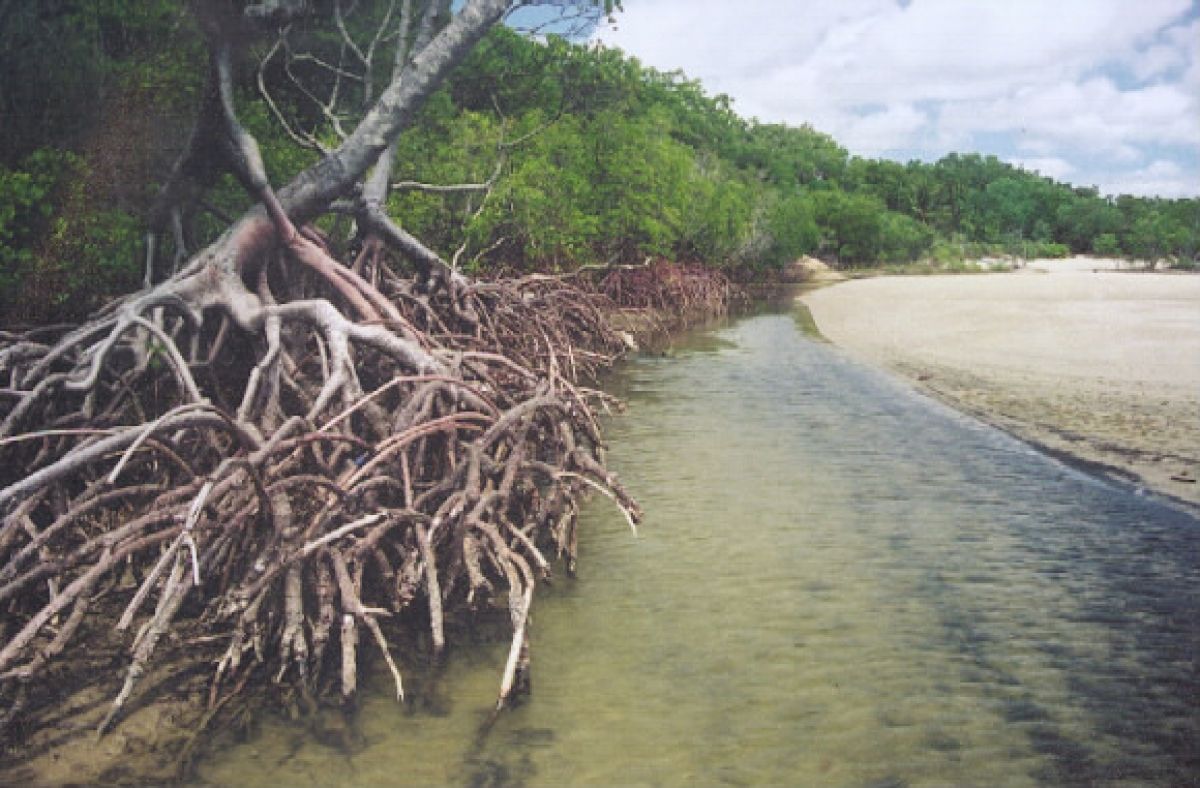
Mangroves at Finch Bay, Cooktown, Guugu Yimithirr Country
Some major vegetation communities include:
Rainforests
In Wet Tropics rainforests, scientists classify forest types by leaf size rather than dominant canopy tree species. The categories range from large mesophyll leaves, typically found in warm, wet lowlands to microphyll leaves in cooler, higher altitudes.
Rainforests can vary enormously in structure and appearance, from cloud forests (over 800 metres in altitude) to low lying wetland palm forests and drier coastal vine thickets. Highland, or upland rainforests (>1,000m in altitude) tend to have smaller (notophyll or microphyll leaves), a dense canopy, abundant moss and lichensand have a thick layer of organic peat-like soil.
Mesophyll rainforest types generally occur in very wet to moist lowlands and foothills, typically below 400m. These forests have many large buttressed trees, palms, and rich liana/epiphyte layers. Leaves are typically greater than 12.5cm in length.
Notophyll rainforests (leaf size 7.5-12.5 cm) are the most extensive rainforest type in the bioregion. These forests are complex and include evergreen, semi-evergreen and semi-deciduous species. The structure of these forests vary in stature from very tall closed forest, to vine thickets with canopy heights of less than 9m.
Microphyll rainforest consist of species with a dominant canopy leaf size of less than 7.5cm in length. In the tropics, microphyll leaves generally indicate an environmental stress, and generally occur on highly weathered soils such as at the tops of high mountains.
Wet sclerophyll forests
Wet sclerophyll forests (also known as tall open forests) are unique to Australia. Wet sclerophyll forest tends to occur in areas of high rainfall, and are a transition between the rainforest, and the drier open eucalypt forest. In the Wet Tropics they occur as a narrow zone along the western margin of the region's rainforests. Structurally they are dominated by tall eucalyptus (Eucalyptus grandis) or turpentine (Syncarpia) trees up to 60 metres, with an understory of rainforest or grassy shrubs.
Sclerophyll forests and woodlands
The Wet Tropics bioregion features significant woodlands forests. These forests occur on drier, less fertile soils, often along the western and northern fringes or rain-shadow valleys or acting as an ecological bridge between wetter forests and dry tropical savannas.
Dominant trees vary and can be mixed—eucalyptus (including crombie), melaleuca (tree-tree or paperbark), acacia (wattle), syncarpy (turpentine), lophostemon (brush box) or casuarina (she-oak).
Wetlands
The Wet Tropics is home to a range of wetlands, from towering paperbark swamps and scrubby whipstick melaleuca swamps to wet sedgelands and grasslands. The different wetland vegetation types are often found as complex mosaic mixed with some drier vegetation types in poorer soils.
Mangroves
The region has one of the highest diversities of mangrove trees and shrubs in the world (over 30 species). They can be found all along the coastline, estuaries, muddy tidal zones and major waterways. Mangroves may form mixed forests with palms and vine forests.
Detailed technical descriptions of vegetation communities and regional ecosystems found across Queensland can be found here.
Last updated: 13 Oct 2026